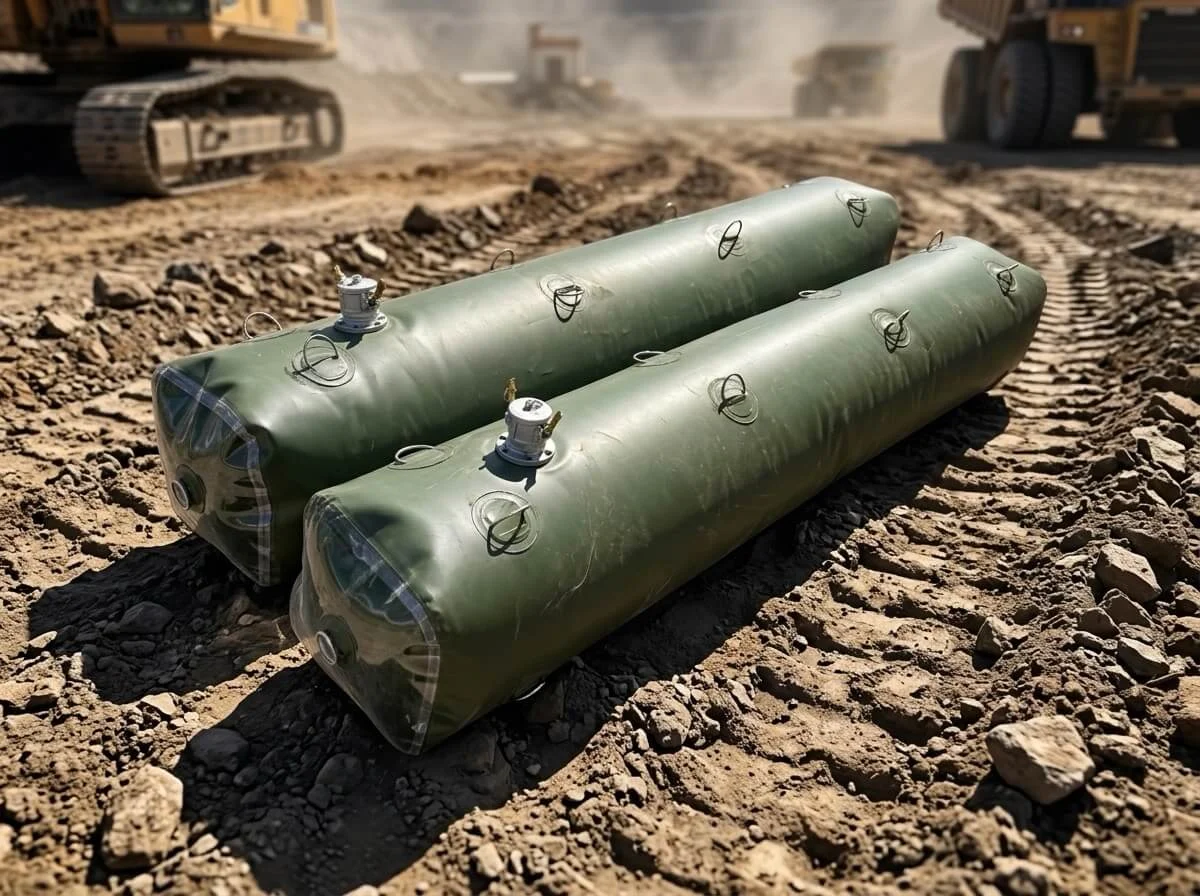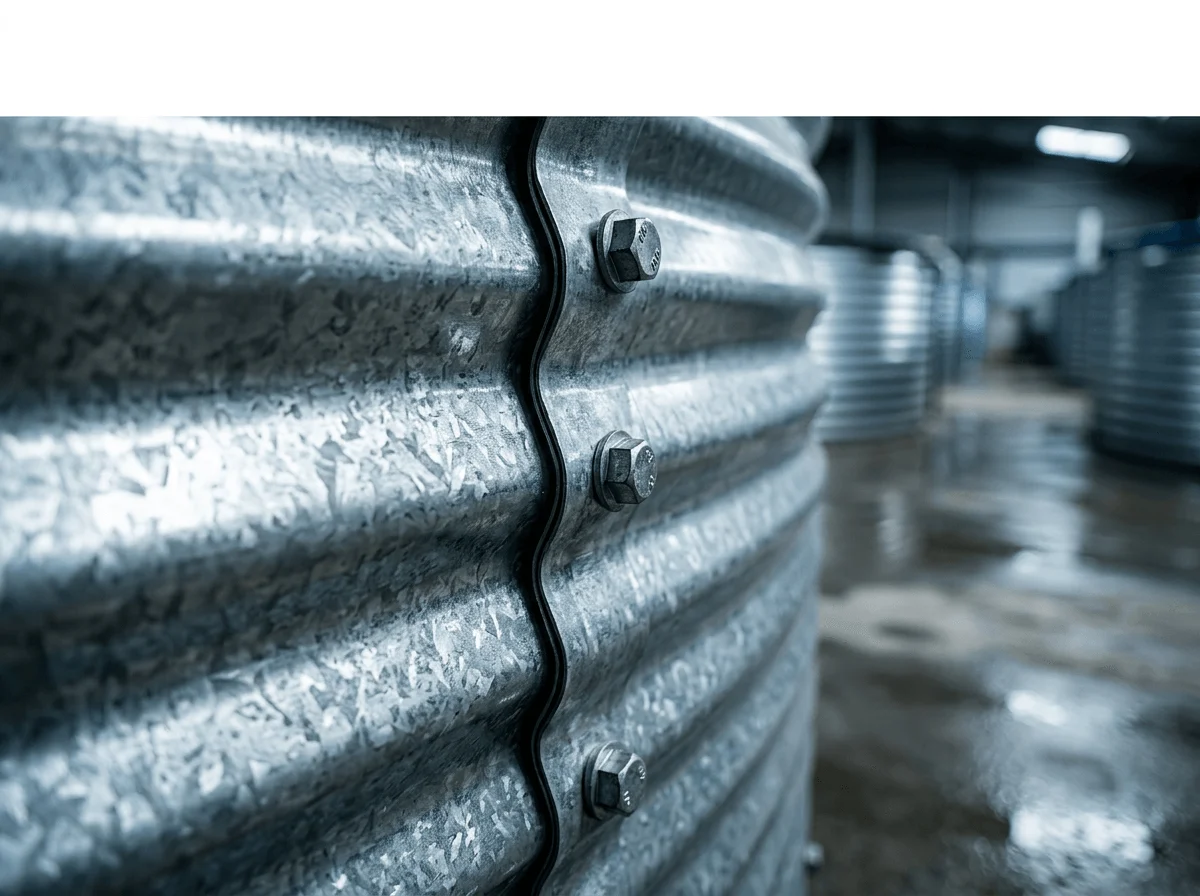
Aging rigid fuel tanks in heavy agricultural machinery often crack under intense vibration, causing disastrous fuel leaks. Finding an exact aftermarket replacement is nearly impossible and exorbitantly expensive.
Yes, you can add a flexible TPU bladder to a custom fuel cell. Acting as a heavy-duty, leak-proof inner liner, the bladder absorbs structural vibrations and prevents fuel seepage. This retrofitting method offers a highly scalable, cost-effective solution for non-standard heavy equipment and commercial fleets.
While adding a flexible internal liner to an existing rigid tank seems conceptually straightforward, executing this modification for industrial-scale operations requires precise material selection. Overlooking the engineering variables will inevitably lead to ruptured liners and catastrophic equipment downtime.
Why retrofit heavy machinery with a customized flexible fuel bladder?
Rigid metal cells suffer from metal fatigue and weld-seam fractures over time. Ignoring these micro-abrasions eventually grounds your entire engineering fleet during critical operations.
Retrofitting heavy machinery with a customized flexible fuel bladder eliminates the risks of metal fatigue. The pliable TPU material conforms precisely to the rigid outer shell, absorbing mechanical shocks and vibrations, thereby dramatically extending the lifespan of your custom fuel cells without expensive tank replacements.
Let’s break down the industrial economics of retrofitting versus replacing. When a rigid tank fails, procurement managers typically face three operational options.
The Economics of Fuel Cell Modification
- OEM Rigid Replacement1: Extremely costly, plagued by long lead times, and still fundamentally susceptible to future vibrational cracking under heavy payload operations.
- Welding Repairs: A temporary band-aid. Heat-affected zones inevitably weaken the surrounding metal, leading to secondary failures when subjected to high-stress agricultural or construction environments.
- Custom TPU Bladder Integration2: The definitive engineering solution. By utilizing a high-tensile internal bladder, the rigid shell acts merely as a protective exoskeleton while the internal flexible polymer handles hydrostatic pressure and fluid containment.
Comparative Performance Metrics
| Metric | Rigid Metal Cell | TPU Bladder Retrofit3 |
|---|---|---|
| Vibration Tolerance | Low (Prone to weld fatigue) | Exceptional (Flexible shock absorption) |
| Tooling Cost | High (Requires custom molds and metalwork) | Negligible (High-frequency welding agility) |
| Deployment Speed | 4-8 weeks | 7-14 days (Bancy Factory Standard) |
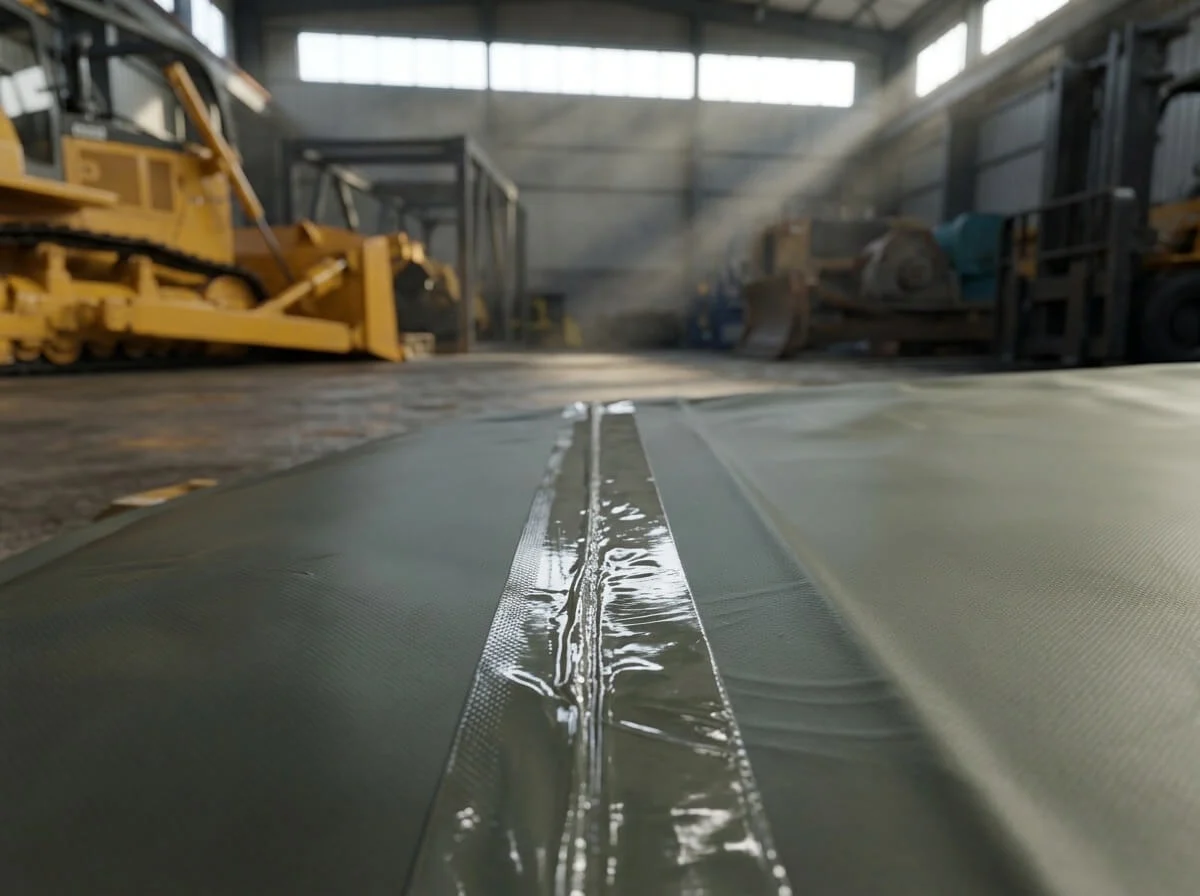
Cheap market standards often rely on low-grade PVC for temporary liquid storage4, which degrades rapidly upon contact with hydrocarbons. At Bancy Solutions, our factory standards mandate the use of advanced TPU polymers and double-layer welding techniques5, ensuring maximum structural integrity for heavy-duty commercial applications.
What are the engineering challenges of inserting a bladder into an existing rigid cell?
Cramming a generic bladder into a complex rigid cavity creates massive friction points. Unmitigated chafing will quickly wear through the liner, resulting in internal fuel pooling.
The primary engineering challenges include preventing abrasion against the rigid shell’s internal seams, managing thermal expansion, and ensuring zero-leakage integration at port sites. Precise dimensional matching and the application of heavy-duty aluminum flanges are strictly critical to overcoming these structural hurdles.
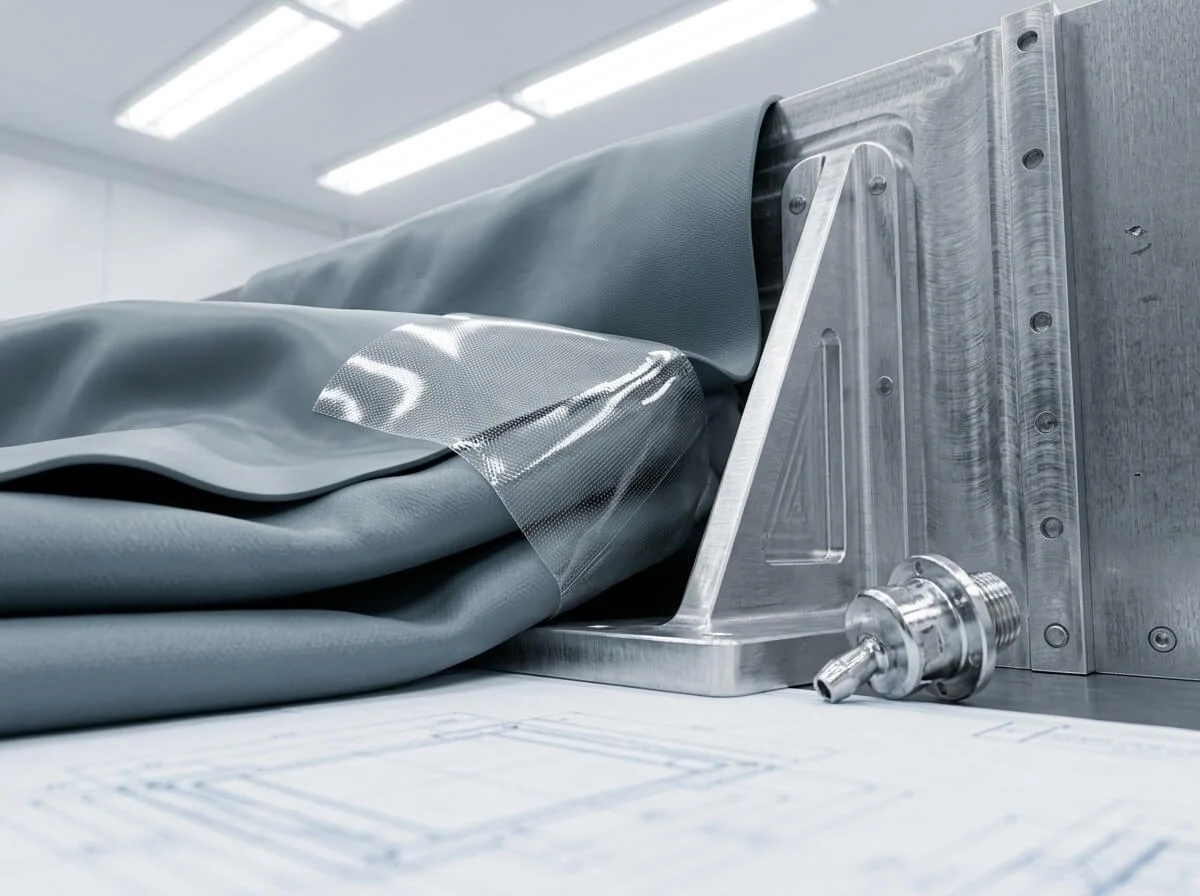
Simply dropping a flexible membrane into a steel box is a recipe for operational failure. As an engineering consultant, I have seen numerous commercial fleet projects fail because the internal cavity dimensions were miscalculated, leading to excessive material folding and subsequent stress-point ruptures.
Critical Structural Considerations
- Abrasion Resistance: The interior of a custom rigid cell often contains sharp weld slag or rough metallic edges. The flexible liner must be engineered with a highly abrasion-resistant TPU exterior6, or an appropriate protective geotextile buffer must be applied between the shell and the membrane.
- Hydrostatic Pressure Distribution: A poorly fitted bladder will stretch unevenly under a full load. The mechanical tension must be uniformly distributed across all internal planes to prevent localized material failure.
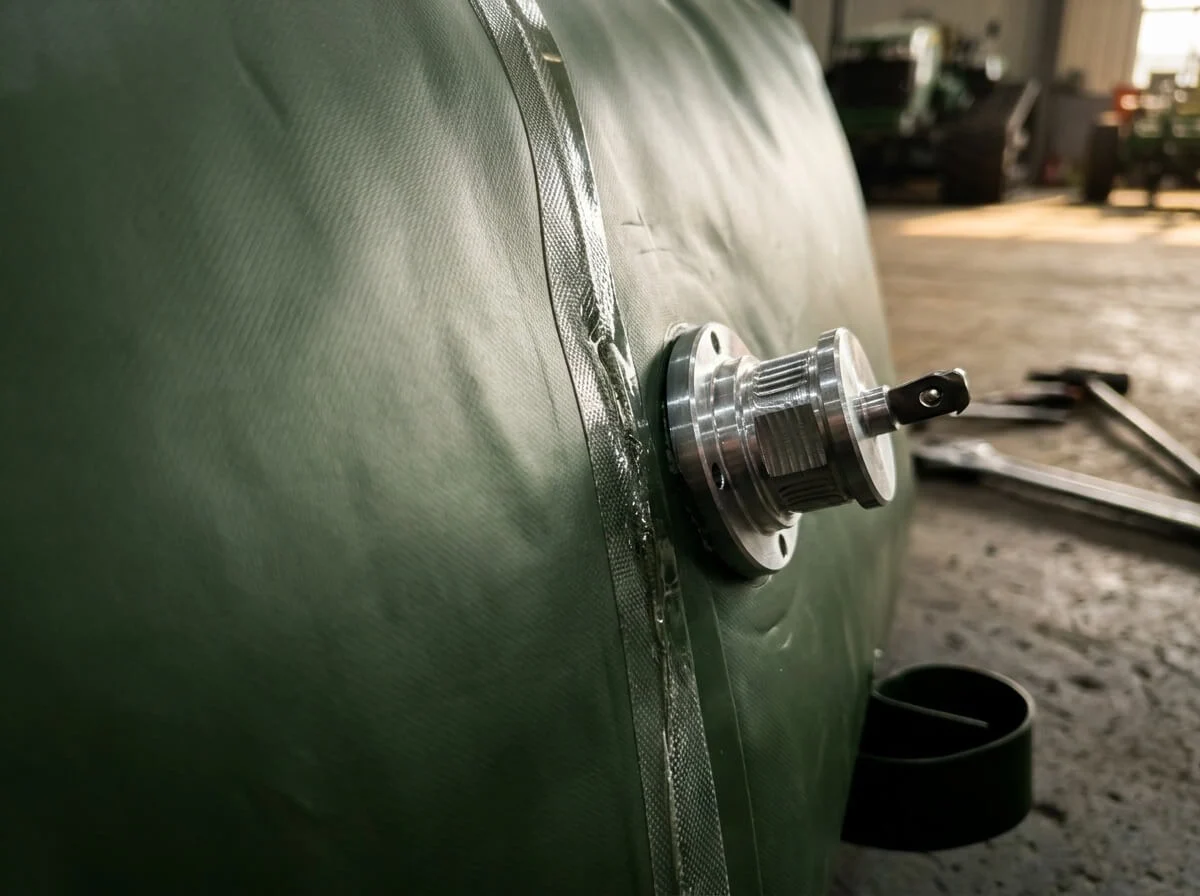
- Port Alignment and Sealing: This is exactly where cheap aftermarket alternatives fail. Standard market fittings leak under constant engine vibration. We engineer our industrial units with specialized heavy-duty aluminum flanges that bolt securely through both the rigid shell and the TPU material, creating an impenetrable mechanical seal7.
Bancy Factory-Direct B2B Solution: Ready to upgrade your fleet’s fuel capacity without exorbitant OEM8 costs? Explore our highly customizable100-Gallon Fuel Bladder (TPU). Engineered for extreme industrial environments, we can configure the exact dimensions and flange placements to integrate flawlessly into your existing heavy machinery.
By addressing these technical constraints strictly during the design phase, procurement managers can secure a fail-safe fuel storage system that consistently outperforms original equipment specifications.
How Bancy uses Simple Drawings to perfectly match your custom dimensions?
Demanding complex 3D CAD files unnecessarily delays the procurement process. Waiting weeks for outsourced engineering drafts stalls your entire fleet retrofitting schedule.
Bancy Solutions utilizes a Simple Drawing protocol to accelerate custom bulk orders. Procurement managers only need to provide the maximum internal length, width, and height of the rigid cavity. Our engineering team calculates the exact tolerances to manufacture perfectly fitting bladders within days.
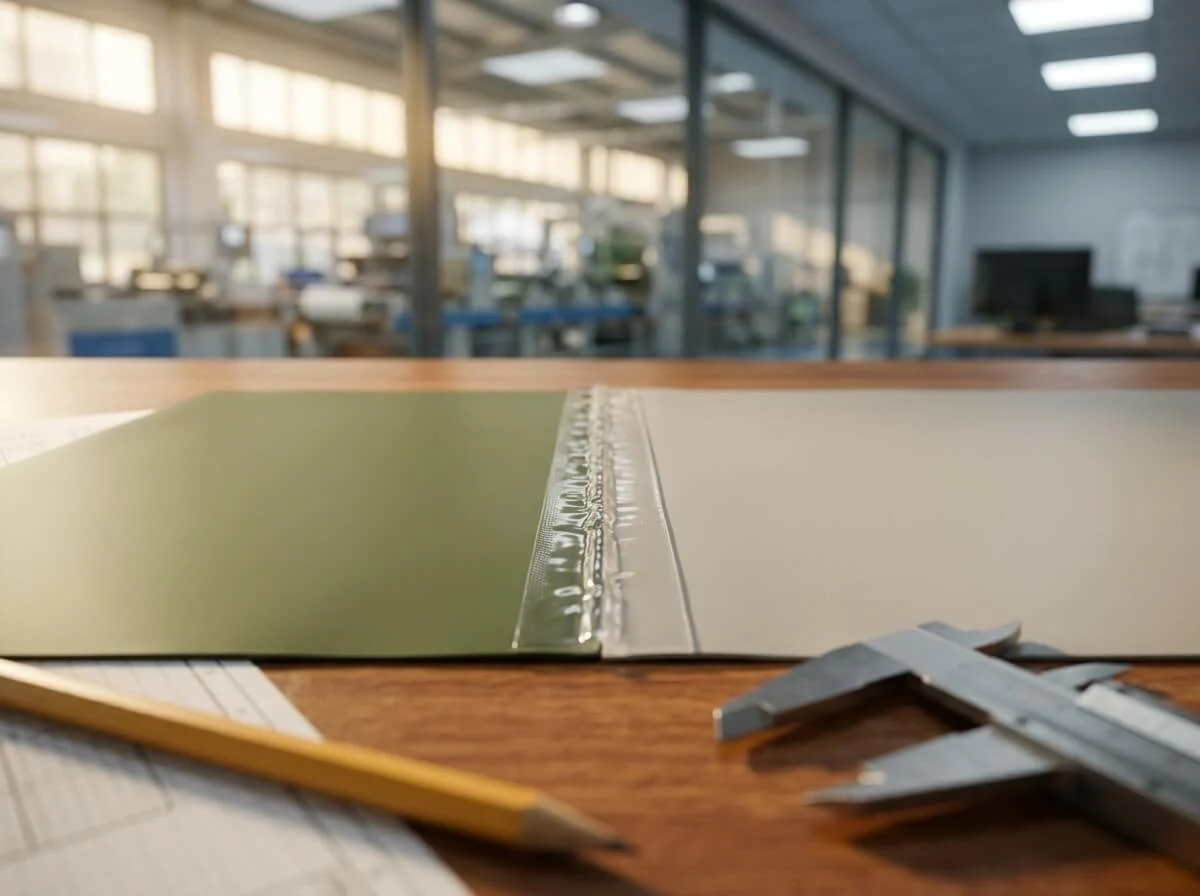
Agile manufacturing9 fundamentally requires streamlined technical communication. You do not need an in-house mechanical drafting department to initiate a bulk custom engineering order with our production facility.
The Agile Customization Process
We actively bypass the bureaucratic bottlenecks typical of traditional heavy manufacturing. Here is how our engineering team optimizes your custom supply chain:
- Dimensional Intake: You provide the absolute internal cavity dimensions (L x W x H) and precise port locations via a straightforward hand-drawn sketch or basic digital layout.
- Tolerance Engineering: Our technical team mathematically calculates the necessary dimensional reduction allowances (typically 2-5%) ensuring the filled internal membrane does not chafe aggressively against the restrictive internal walls.
- Rapid Prototyping & Production10: Utilizing our 5 automated production lines in Chongqing, we swiftly transition from specification confirmation to high-volume manufacturing without missing a deadline.
Why Agile Manufacturing Matters
Many rigid tank manufacturers mandate high Minimum Order Quantities (MOQs) and charge exorbitant tooling fees for custom dimensional requirements. Bancy aggressively eliminates this friction. Because we construct these industrial liners using high-frequency welding rather than physical hard molds, our tooling setup costs are virtually zero. This agility allows us to offer custom dimensions even for moderate bulk orders. Whether you need an off-the-shelf100-Gallon Fuel Bladder (TPU) or a completely non-standard geometric footprint for a specialized generator, our direct-from-factory process guarantees absolute engineering precision.
Which TPU materials are mandatory for diesel versus gasoline custom cells?
Using the wrong polymer for your fuel type guarantees rapid chemical degradation. A catastrophic bladder dissolution will completely destroy your engine’s delicate injection system.
For custom fuel cells, specific TPU formulations are strictly mandatory. While TPU Polyether handles general industrial water storage, heavy-duty TPU Polyester offers superior chemical resistance against harsh hydrocarbons, making it absolutely mandatory for diesel, gasoline, and aviation fuel containment.
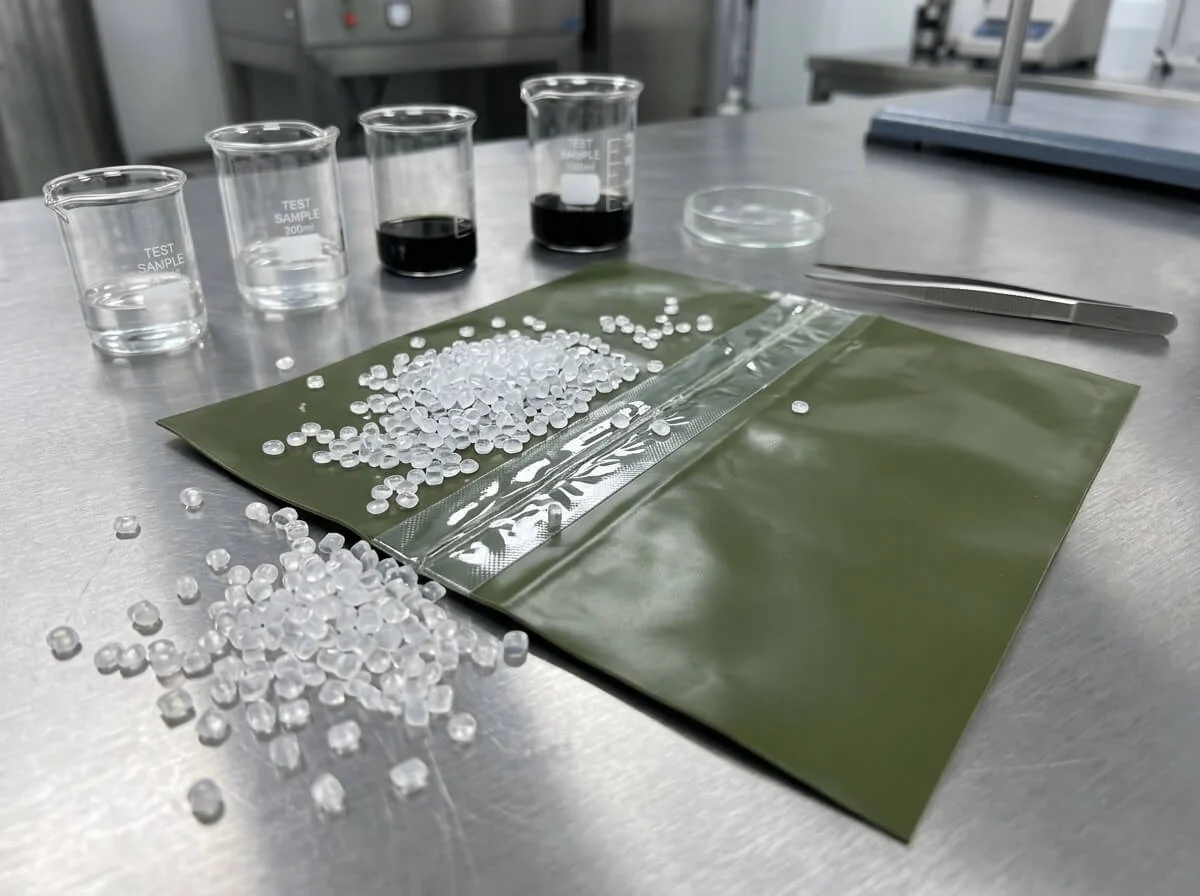
Chemical compatibility is the most critical factor in fuel storage engineering. Procurement managers must demand absolute transparency regarding polymer composition, as standard market materials often disguise cheap blends that swell, harden, or delaminate when exposed to aggressive industrial fuels.
Decoding TPU Polymer Variations
Let’s evaluate the industrial characteristics of the primary Thermoplastic Polyurethane (TPU) classifications utilized in agile manufacturing:
- TPU Polyether: Features excellent low-temperature flexibility and outstanding resistance to hydrolysis (water-induced degradation). However, its fundamental resistance to harsh hydrocarbons is entirely inadequate for continuous internal fuel storage applications.
- TPU Polyester: The absolute non-negotiable industrial standard for fuel containment. It boasts exceptional oil and solvent resistance, maintaining high tensile strength and structural integrity even under prolonged, aggressive exposure to commercial diesel.
Bancy’s Material Guarantee
| Fuel Application | Required Polymer Matrix | Primary Engineering Benefit |
|---|---|---|
| Diesel / MGO | Heavy-Duty TPU Polyester | Prevents molecular breakdown and maintains operational flexibility. |
| Gasoline | Specialized Anti-Static TPU | Actively neutralizes static charge buildup and limits hazardous vapor permeation. |
When you specify a custom inner liner from our factory, we meticulously align the polymer chemistry directly with your specific operational fluid. We utilize rigorous double-layer welding processes and industrial-grade TPU Polyester11 to ensure that your custom fuel retrofits drastically outlast the heavy machinery they power, completely bypassing the failure rates of substandard commercial plastics.
Conclusion
Retrofitting rigid cells with custom TPU liners offers an engineered, cost-effective solution for heavy fleets. By leveraging agile manufacturing, procurement managers can permanently eliminate vibration-induced fuel leakage failures.
-
Discover insights on the drawbacks of OEM Rigid Replacement and why it may not be the best choice for your operations. ↩
-
Explore this link to understand how Custom TPU Bladder Integration can enhance durability and performance in industrial settings. ↩
-
Explore this link to understand how TPU bladder retrofits enhance durability and performance in demanding environments. ↩
-
Explore this link to discover effective strategies and materials for safe and efficient temporary liquid storage. ↩
-
Explore this link to understand how double-layer welding enhances durability and performance in demanding environments. ↩
-
Understanding abrasion-resistant TPU can enhance your design choices for durability and performance in industrial applications. ↩
-
Exploring mechanical seals will provide insights into ensuring leak-proof systems in demanding environments. ↩
-
Understanding OEM benefits can help you make informed decisions for reliable and efficient equipment performance. ↩
-
Explore this link to understand how Agile manufacturing can enhance efficiency and reduce costs in production processes. ↩
-
Discover insights on how Rapid Prototyping & Production can accelerate your product development and reduce time to market. ↩
-
Explore this link to understand why TPU Polyester is the industry standard for fuel containment, ensuring safety and durability. ↩