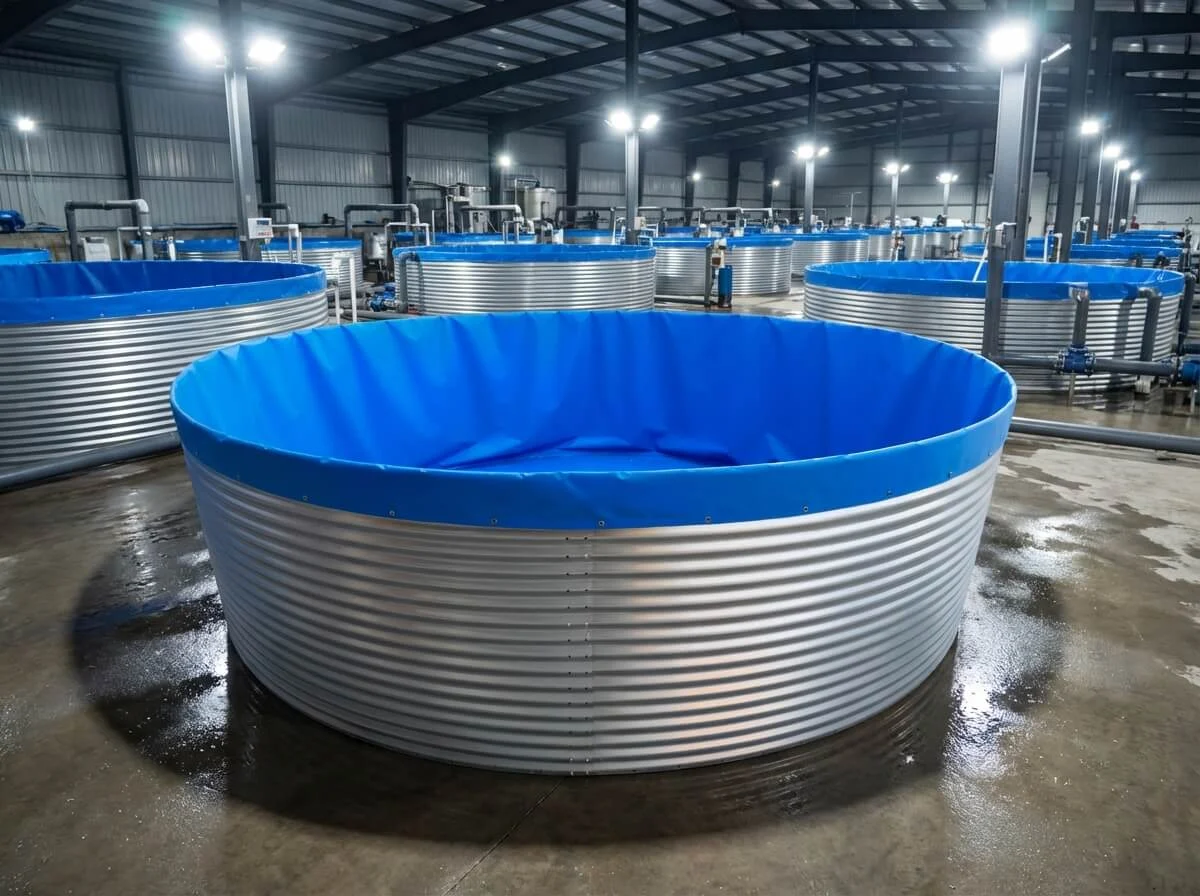
Deep water means high yields, but tank failures destroy profits. You cannot stretch metal beyond its physical limits. I will show you how to build safe, ultra-deep tanks.
Tanks over 1.45m require stacked galvanized sheets because factory rolling machines max out at this width. Water pressure bends single panels at greater depths. We stack two structural sheets vertically to double the physical strength. This handles the extreme hydrostatic pressure of deep commercial aquaculture safely.
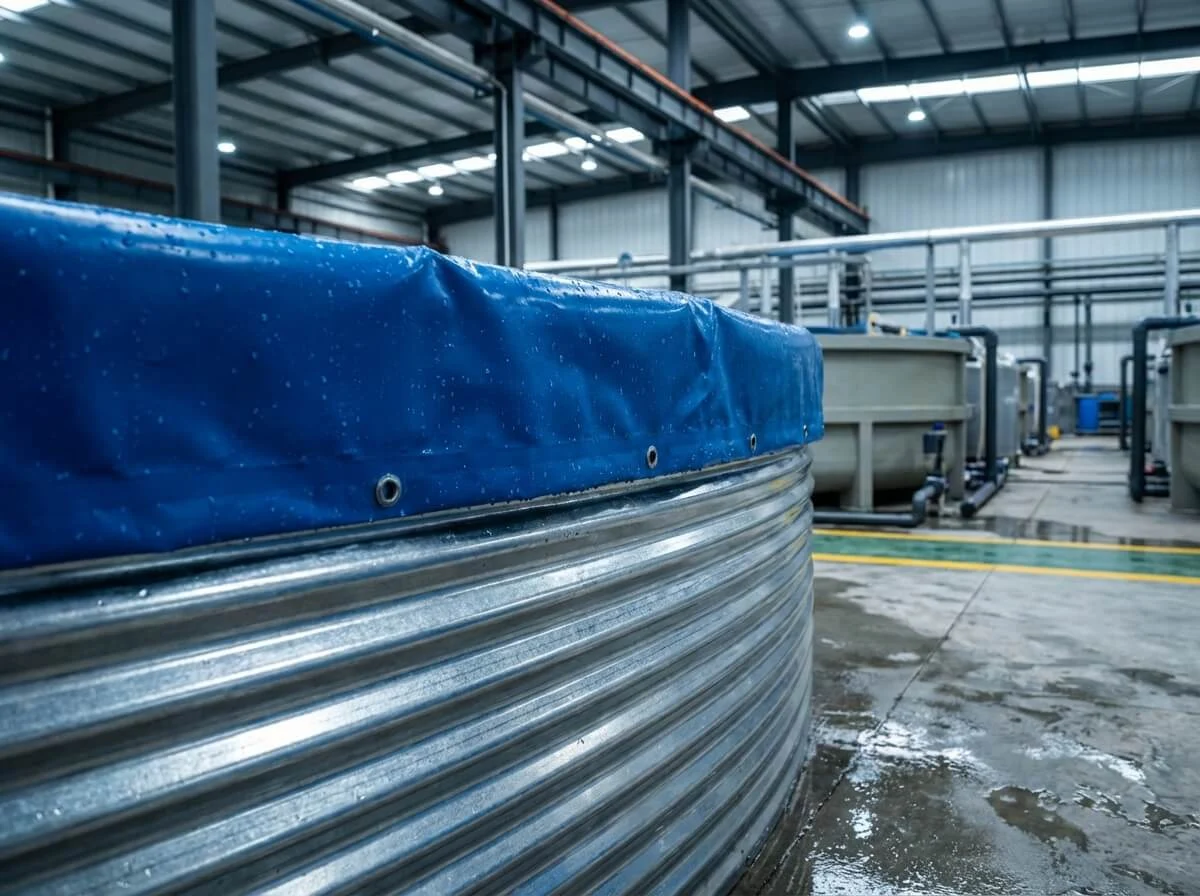
You must understand the exact physical limits of steel before you pour concrete or assemble hardware. Engineering mistakes in water depth will cost you the entire project. Let us look closely at the exact numbers that govern commercial fish farm safety1.
What is the structural pressure limit of a single galvanized sheet?
Single sheets seem easy to buy, but ignoring rolling limits causes blowouts. You need to know when one sheet is enough. Here is the strict manufacturing reality.
The strict structural limit for a single galvanized steel sheet in our factory is 1.45m high. The steel maintains its core strength against internal water pressure at this exact height. Anything taller exceeds standard rolling equipment limits and loses structural integrity rapidly.
The Physics of Factory Rolling Equipment
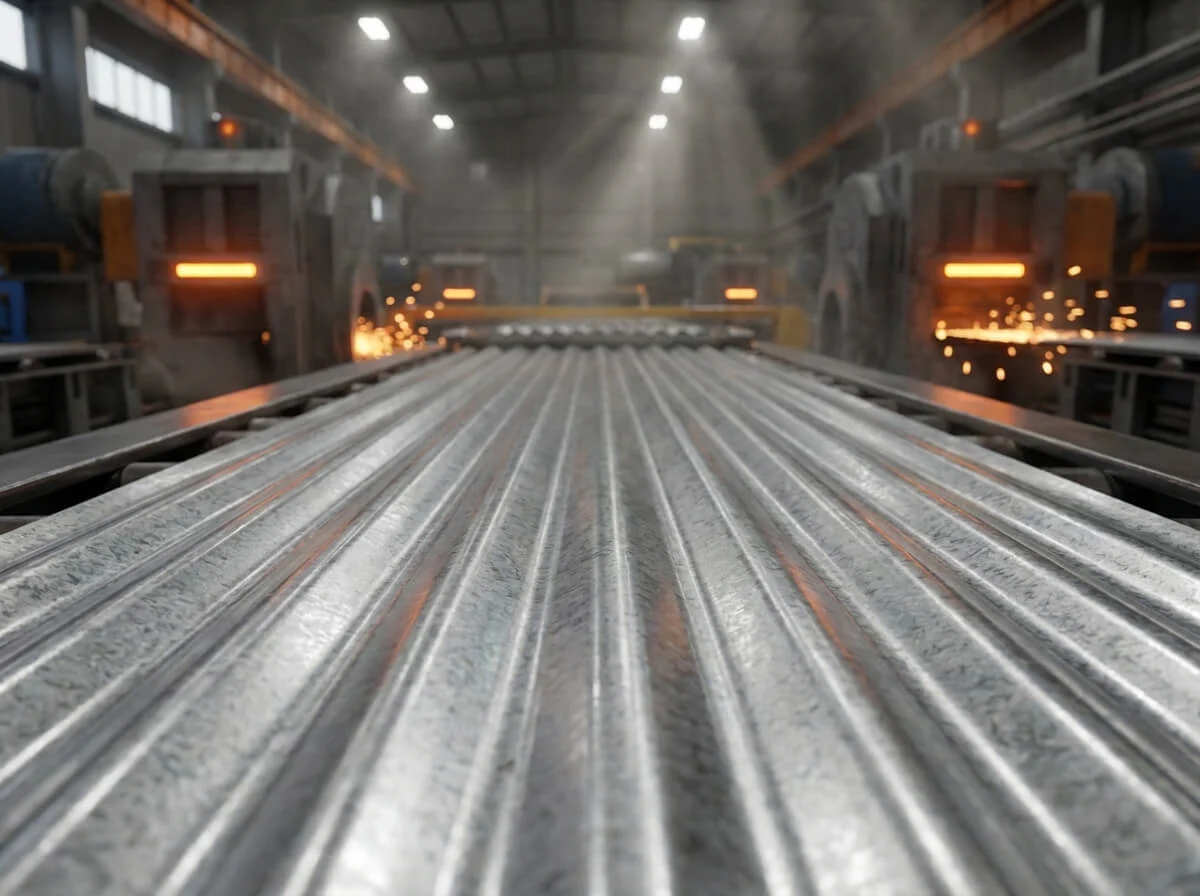
I work directly with our five automated production lines in Chongqing. I see exactly how steel behaves. Standard industrial rolling machines press hot-dipped galvanized steel2 into corrugated profiles. These machines can only process 1.45m of steel safely. When you try to stretch a single sheet to 1.8m or 2m, the center of the sheet becomes weak. It loses the rigidity needed to hold tons of water. You cannot cheat physics.
The High Cost of Pushing Limits
Many contractors try to find a factory that will make a 2m single sheet. This is a fatal mistake. The steel will warp outward over time. The internal PVC liner3 will bulge against the sharp metal. A sudden tank failure destroys your farm. We refuse to sell single sheets over 1.45m because we value your long-term success.
| Metric | Single Sheet (Max 1.45m) | Over-stretched Single Sheet (>1.45m) |
|---|---|---|
| Manufacturing Safety | 100% Reliable | High risk of metal grain damage |
| Hydrostatic Resistance | Excellent | Very Poor (Center warping) |
| Liner Protection | Smooth and stable | High risk of puncture from bending |
| Bancy Recommendation | Use for standard tanks | Never use |
The engineering behind Bancy’s dual-layer stacked sheet structure?
You need 2.2m tanks, but single sheets fail. Your yield goals are blocked. Bancy solves this pressure problem with a robust dual-layer stacked steel system.
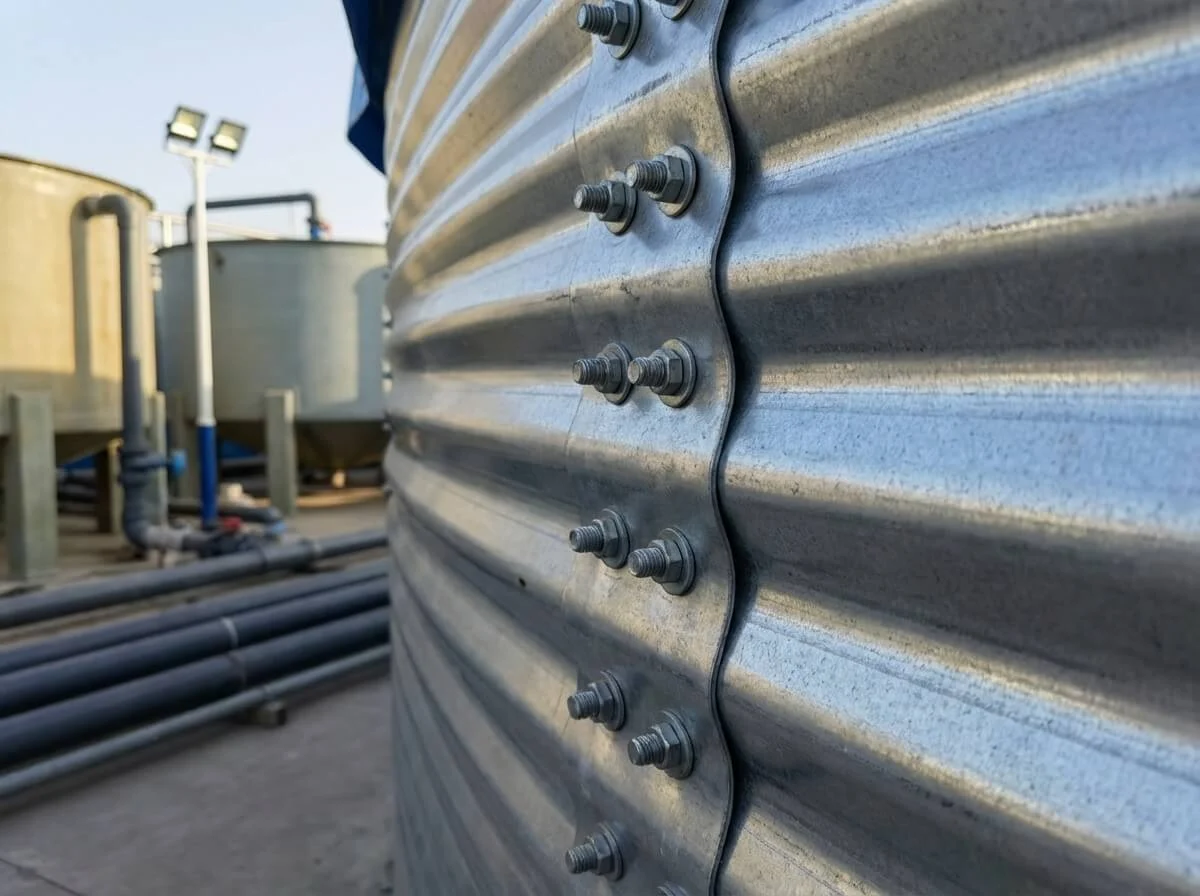
Our dual-layer stacked structure physically bolts two separate galvanized steel panels vertically. We provide two 1.15m sheets for a 2.2m tank. This external reinforcement doubles the structural strength against deep water pressure. It is a solid steel upgrade, not a double-layer PVC liner.
External Steel Reinforcement vs. Internal Liners
Some buyers confuse stacked steel with double-layered PVC liner3s. I must clarify this detail. The stacked structure is purely for the external galvanized shell. We take two heavy-duty corrugated steel boards. We bolt them together horizontally along the middle seam. The internal industrial PVC liner remains one solid, watertight piece. This method separates structural strength from water retention. You get the brute strength of thick steel exactly where the pressure is highest.
Why Stacking Works for Deep Commercial Tanks
Water pressure does not increase in a straight line in deep commercial aquaculture4. It gets much stronger at the very bottom. We use thick steel on the bottom layer. We use standard steel on the top layer. This smart design creates massive cost savings for your wholesale orders. It is a highly efficient technical solution.
| Feature | Standard Single Shell | Dual-Layer Stacked Shell |
|---|---|---|
| Max Tank Height | 1.45m | Up to 3.0m |
| Structural Overlap | None | 10cm horizontal bolting seam |
| Water Pressure Handling | Standard | Extreme |
| Shipping Efficiency | Easy | Highly compact (panels pack flat) |
Why we mandate "Large Boards" for commercial height tank assembly?
Small panels mean too many bolts and high leak risks. Labor costs eat your budget. We mandate large boards to cut your assembly time in half.
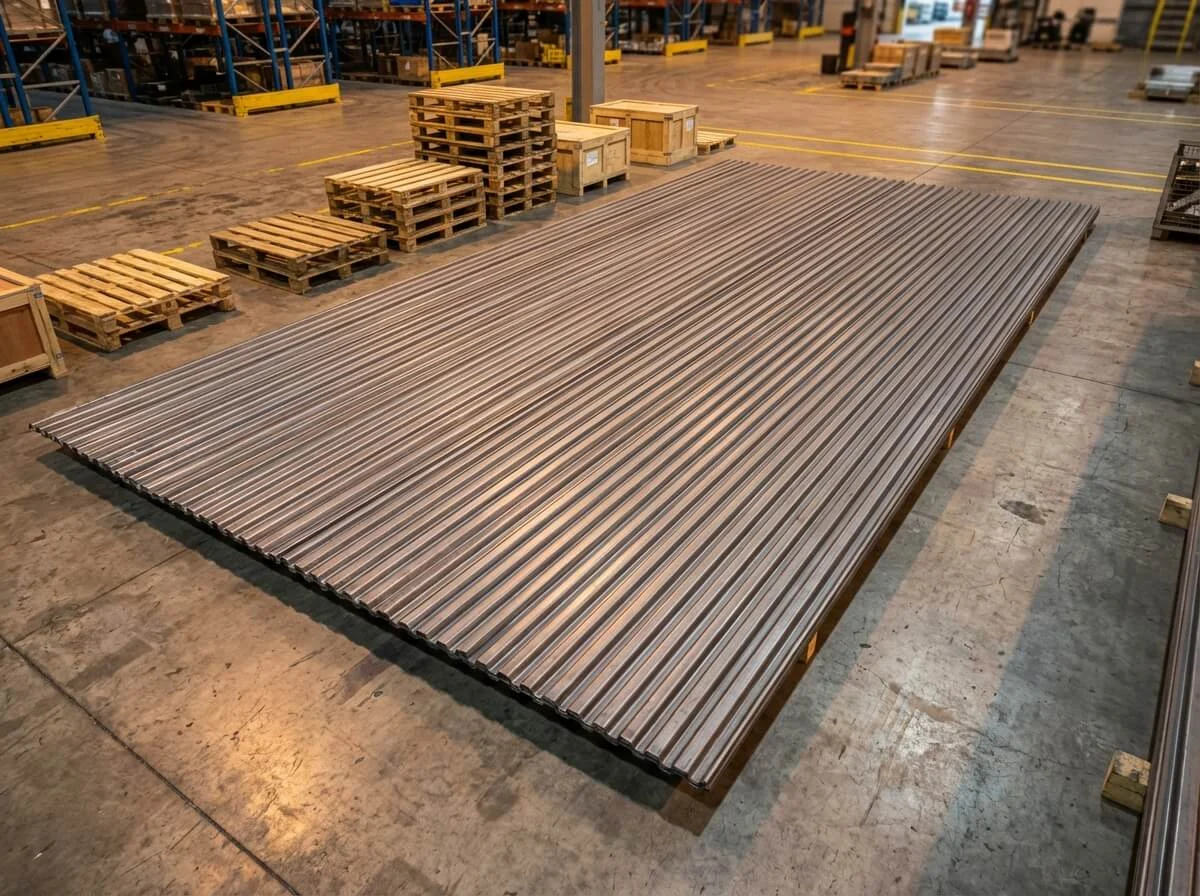
We mandate large boards because they drastically reduce the number of vertical seams. Fewer seams mean higher structural integrity and much faster deployment. Large boards optimize shipping volumes for cross-border logistics and ensure the tank wall acts as one solid unit.
Reducing Structural Weak Points
Every bolt hole and vertical seam is a potential weak point. I tell every procurement manager the same thing. Use large boards5. Small panels are for hobbyists. A tank wall made of many small pieces will shift under the weight of water in a massive commercial facility. Large continuous steel boards create rigid, unbroken tension lines. This tight tension is what stops a huge tank from bursting.
Logistics and Deployment Speed
You care about landed costs and rapid deployment. Shipping massive large boards might seem difficult at first. However, they pack totally flat inside standard sea containers. They optimize the cross-border shipping volume perfectly. Your workers install three large panels instead of ten small ones when the boards arrive. You avoid costly engineering mistakes6 during the fast setup.
| Assembly Metric | Small Modular Panels | Bancy Large Boards |
|---|---|---|
| Vertical Seams | High number | Very low number |
| Structural Integrity | Average | Maximum rigid tension |
| On-Site Labor Time | High | Reduced by 60% |
| Shipping Volume Density | Good | Excellent (Flatter packing) |
Calculating the hydrostatic pressure for 2.2m high aquaculture tanks?
Guessing water pressure causes fatal blowouts. You risk your entire farm investment. Let us use hard numbers to design a 2.2m deep commercial tank.
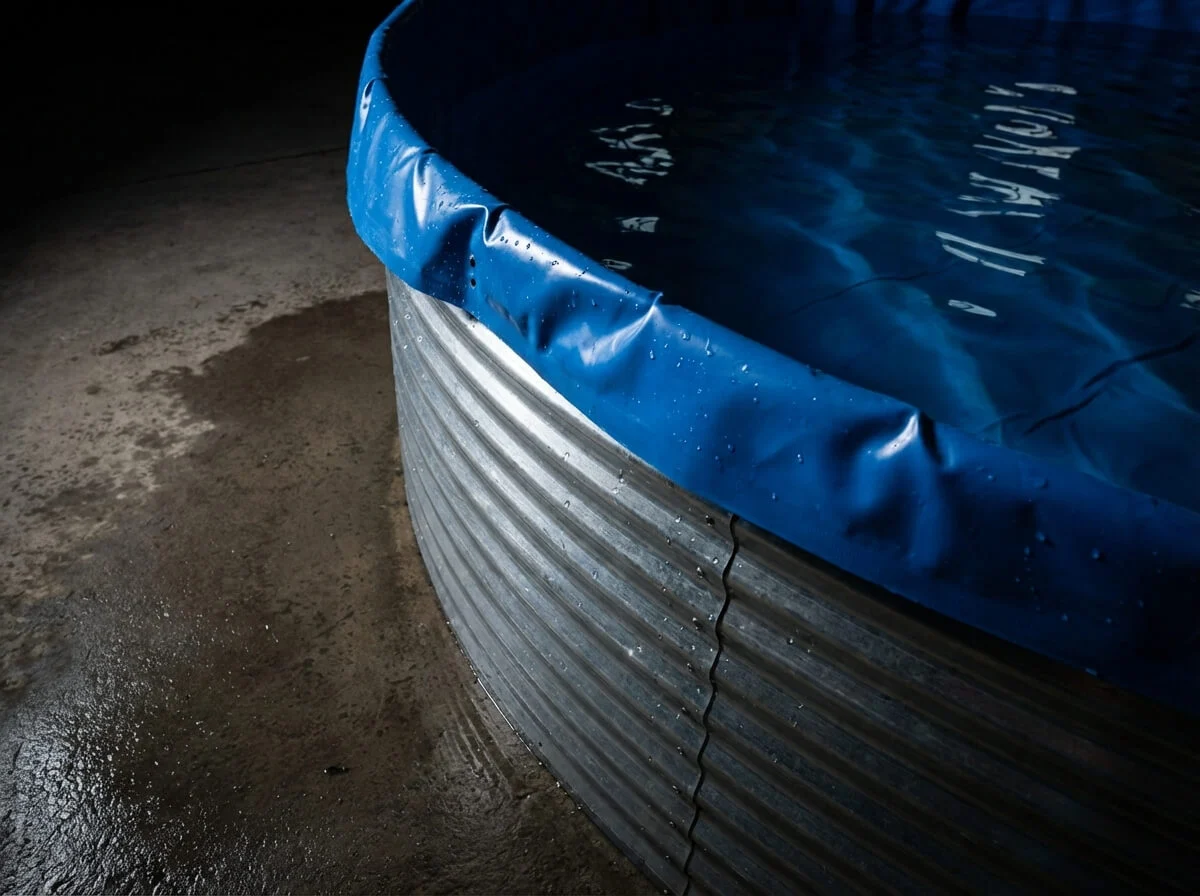
Hydrostatic pressure at 2.2m depth is immense. The bottom edges of a 2.2m tank face over 21.5 kilopascals of outward force. Only horizontally bolted, stacked heavy-duty galvanized sheets can safely deflect this concentrated bottom pressure without bending or breaking.
The Math Behind the Metal
I never sell equipment based on feelings. I use basic physics. The water pressure at the bottom is over twice as strong as at 1.0m in a 2.2m deep tank. This heavy pressure pushes outward against the steel walls. The bottom will warp outward if you use standard thin steel. This pulls the PVC liner3 tight, leading to micro-tears and slow leaks. Our stacked 1.15m panels interlock to create a reinforced metal belt exactly where the pressure hits its maximum peak.
Custom Dimensions and Smart Engineering
We draw simple diagrams to confirm pressure points quickly when you order bulk custom dimensions7. We do not just guess. We calculate the exact thickness of the galvanized sheet required for your specific water depth. We will ensure the bottom panel is engineered for that exact stress load if you want 2.2m deep tanks for high-density tilapia.
| Depth Level | Hydrostatic Force | Structural Requirement |
|---|---|---|
| 0m – 1.0m | Low | Standard metal gauge |
| 1.0m – 1.45m | Medium | Single max-height sheet limit |
| 1.45m – 2.2m | Extreme | Stacked dual-layer heavy-duty sheets |
| Base/Bottom Edge | Maximum Peak | Concrete base + overlapping steel joint |
Conclusion
Deep tanks demand strict physics. Stacked galvanized sheets solve the 1.45m limit, doubling strength and protecting your farm. Choose factory-direct engineering to scale safely and efficiently.
-
Learn about essential safety measures to protect your fish farm investment. ↩
-
Find out the advantages of using galvanized steel in aquaculture tank construction. ↩
-
Understand the importance of a PVC liner in maintaining water integrity and tank safety. ↩ ↩ ↩
-
Gain insights into effective tank design strategies for successful commercial aquaculture. ↩
-
Discover how large boards enhance structural integrity and reduce assembly time. ↩
-
Learn about critical errors to avoid for successful aquaculture tank projects. ↩
-
Find out how to calculate the right dimensions for your specific aquaculture needs. ↩