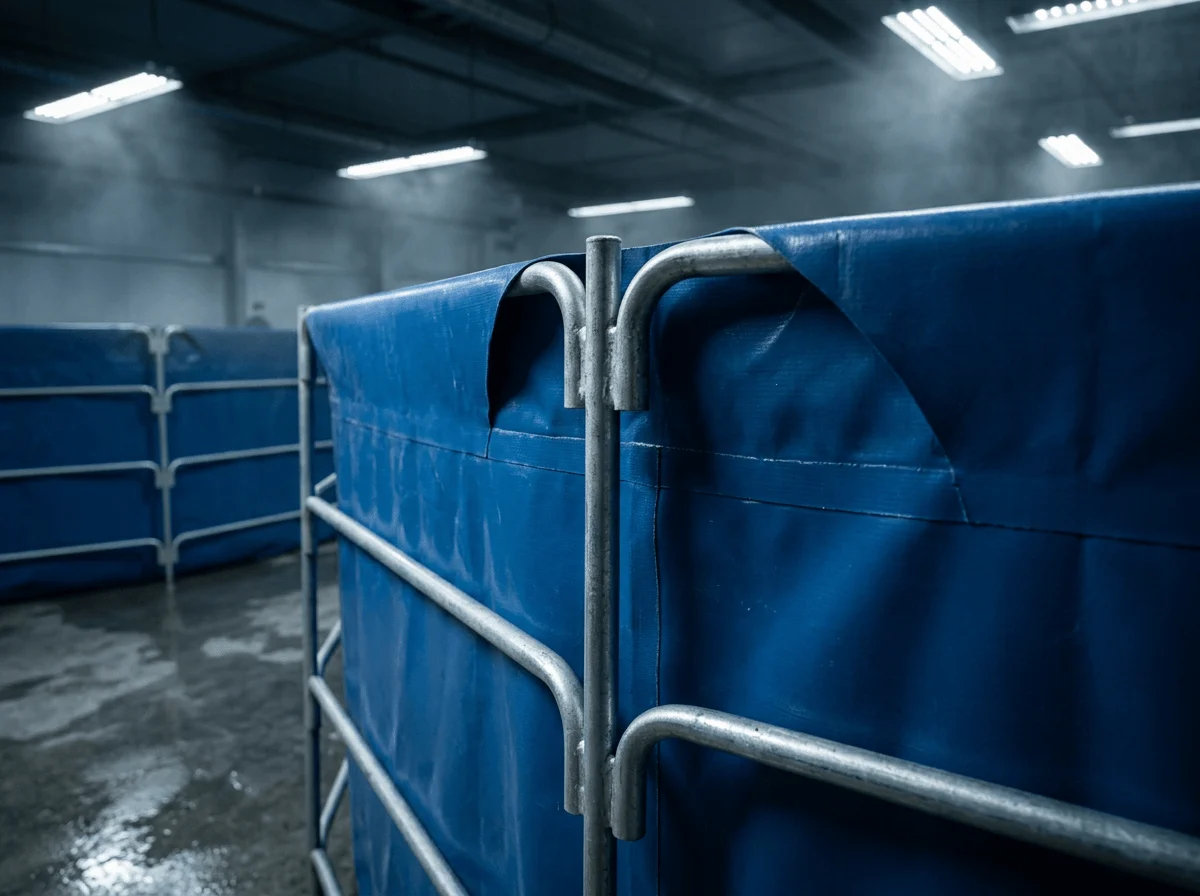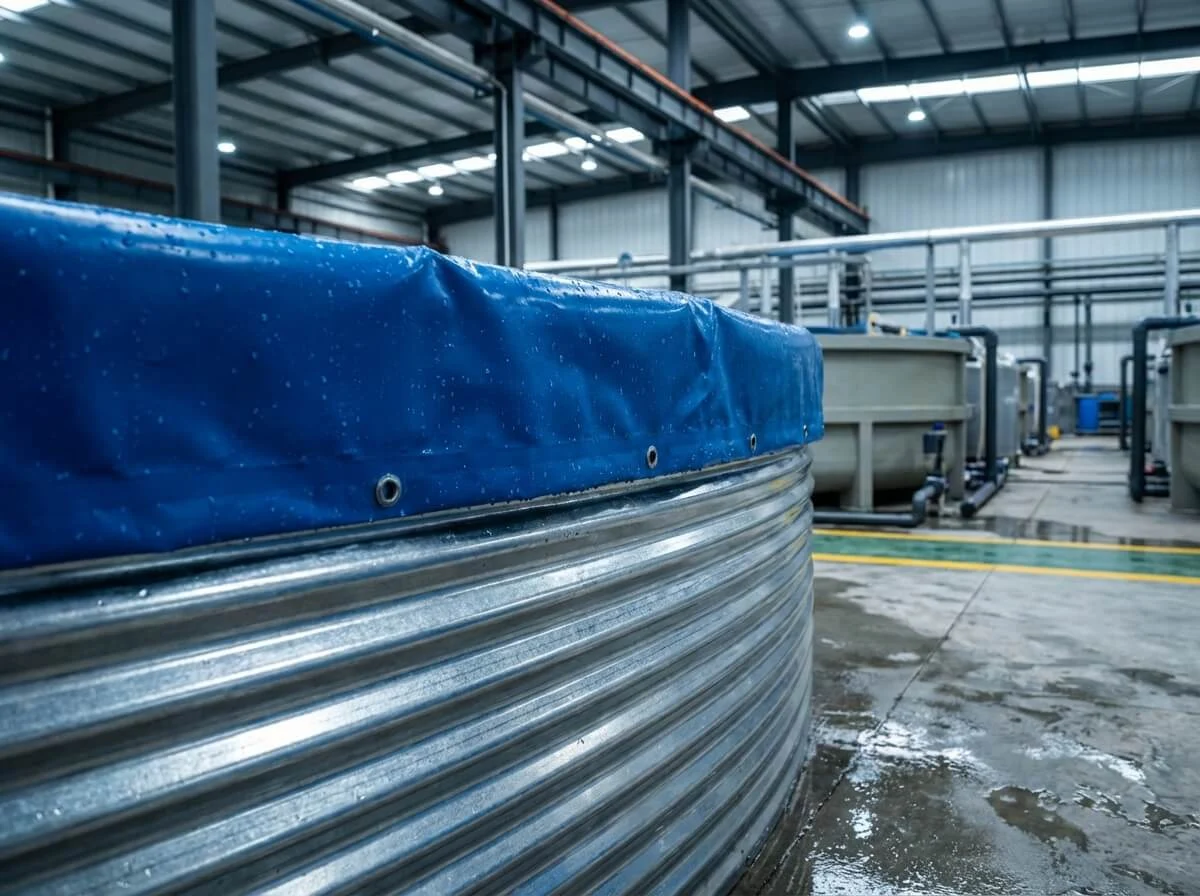
Are your commercial aquaculture tanks failing under pressure? Structural collapse causes catastrophic financial losses for large-scale farms. Engineering reliable, high-volume water storage requires mastering industrial fluid dynamics and material integrity.
Preventing structural failure in aquaculture demands a dual-layered engineering approach: utilizing high-tensile industrial PVC liners to contain static water mass and integrating heavy-duty galvanized steel frames to withstand dynamic hydrostatic pressure. Proper material selection ensures long-term container integrity and maximizes operational safety for commercial facilities.
When dealing with bulk liquid management, standard consumer-grade solutions inevitably succumb to the relentless forces of water mass. To engineer a truly resilient system, procurement managers must evaluate the physics behind container design.
How dynamic fish movement amplifies water pressure against tank walls?
Static water alone stresses containment walls, but adding thousands of active aquatic organisms creates volatile kinetic energy. Ignoring this dynamic turbulence risks rapid material fatigue and sudden seam ruptures.
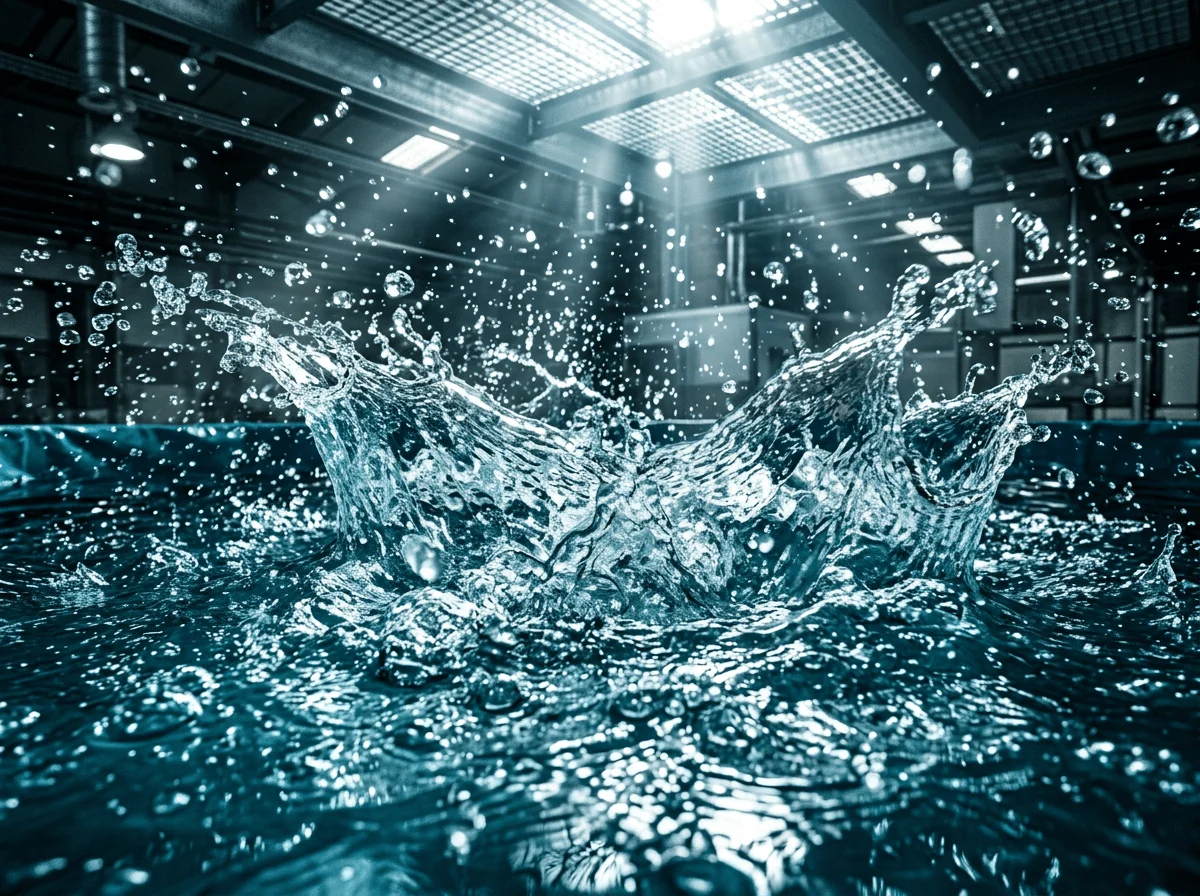
High-density fish movement generates continuous kinetic waves, amplifying the base hydrostatic pressure exerted on tank walls. This dynamic turbulence, or sloshing effect, creates asymmetrical load distribution, requiring commercial aquaculture tanks to feature reinforced structures capable of absorbing fluctuating industrial fluid dynamics without localized failure.
The Mathematics of Kinetic Amplification
At Bancy Solutions, we view large-scale fish farming strictly through the lens of fluid mechanics. The total force on a tank wall is not merely the static hydrostatic pressure; it involves dynamic pressure spikes caused by biomass movement. When thousands of fish react simultaneously to feeding mechanisms, their collective motion translates into powerful kinetic energy waves1 crashing against the containment barrier.
Cheap Market Standards vs. Industrial Reality
Cheap market standards often calculate material tolerances based purely on static loads. Under aggressive dynamic turbulence, subpar structural supports experience micro-flexing, which eventually leads to catastrophic seam failure.
| Force Type | Cheap Market Tanks | Bancy Factory Standards |
|---|---|---|
| Static Hydrostatic | Barely meets absolute minimum limits | Exceeds physical limits by 30% margin |
| Dynamic Turbulence | Flexes, warps, and causes liner stretching | Rigidly absorbs kinetic energy without yielding |
| Wave Impact | High risk of PVC tear at weld lines | Stabilized by double-layer reinforced joints |
Engineering Resonance Control
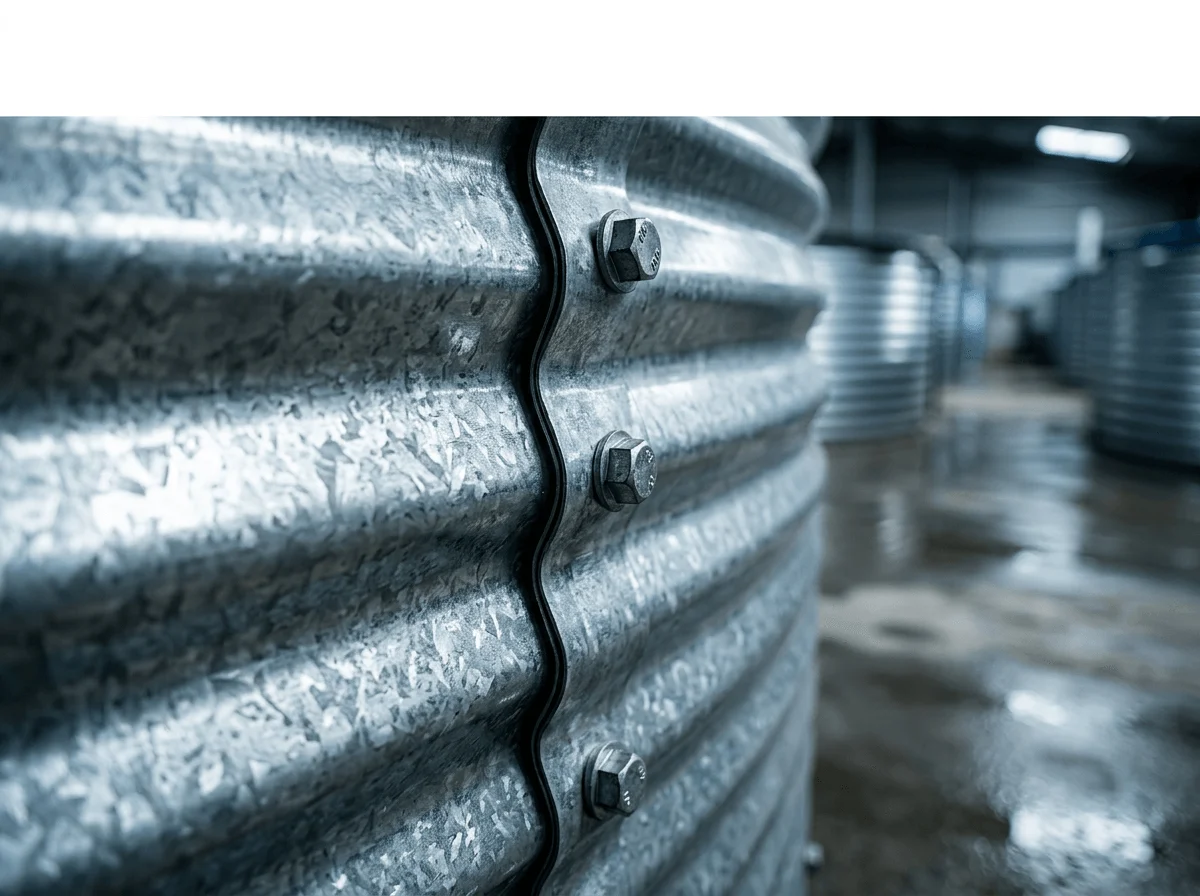
Project contractors must recognize that fluid dynamics dictate operational longevity. Our Galvanized Aquaculture Tank is explicitly engineered to mitigate these amplified pressures, utilizing high-grade corrugated steel to disrupt and distribute kinetic forces evenly across a wider surface area, preventing any single point of localized fatigue.
Evaluating the tensile strength of commercial-grade PVC liners?
A compromised liner translates directly to catastrophic leaks. Procurement managers often face project delays because substandard liners tear during installation or stretch under continuous high-volume water capacities.
Commercial-grade PVC liners must exhibit exceptional tensile strength, maximum tear resistance, and UV stability. Evaluating these metrics ensures the material can withstand prolonged hydrostatic tension, substrate friction, and extreme environmental exposure without molecular degradation, forming a reliable, leak-proof internal barrier for high-density aquaculture operations.
Substrate Friction and Shear Stress
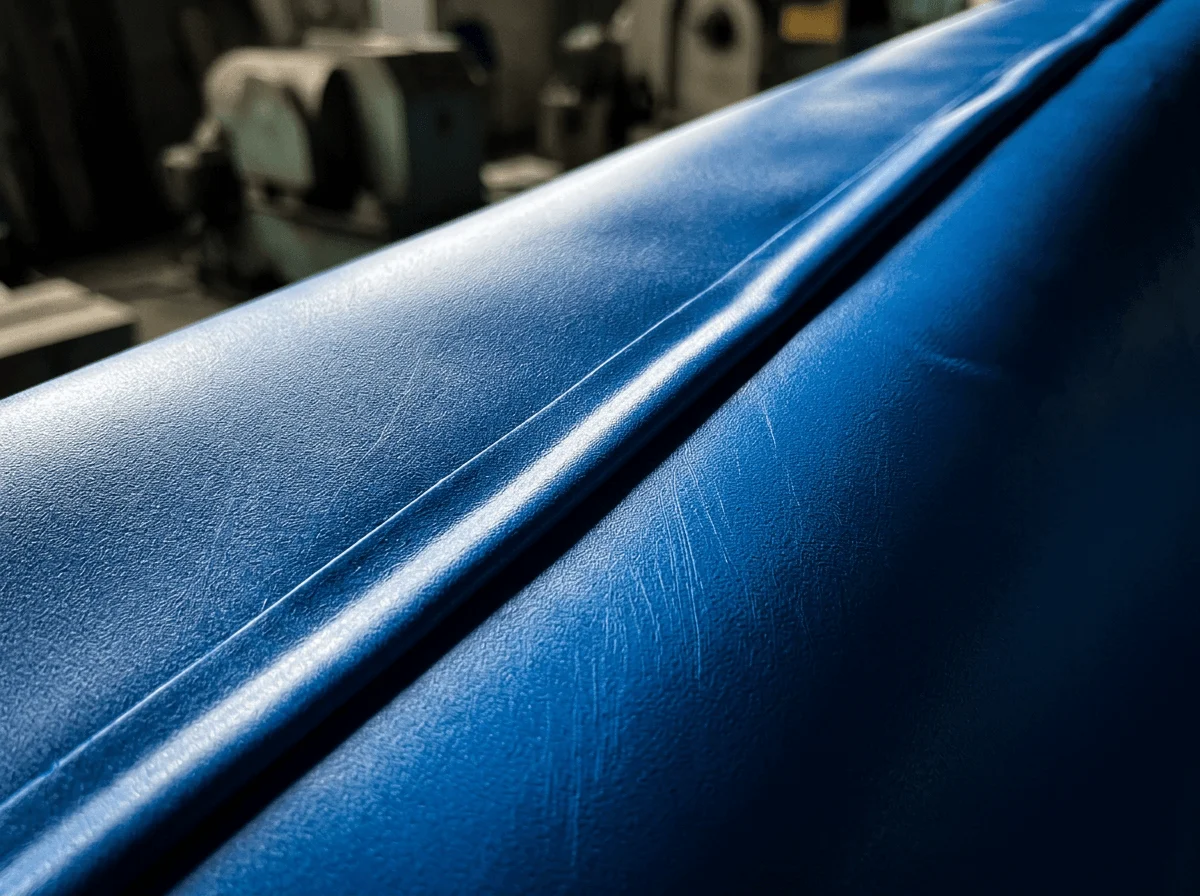
The inner membrane of an aquaculture system serves as the final line of defense. Tensile strength is not merely about pulling force; it dictates how effectively the liner handles the shear stress generated against the tank frame and rough base preparation materials, such as raw concrete or compacted sand.
Molecular Degradation in Cheap Liners
Market-standard liners regularly utilize low-density polymer blends that suffer from severe "creep"—a gradual, irreversible stretching under constant hydrostatic load. This molecular thinning makes them highly susceptible to puncturing. At Bancy Solutions, we combat this by utilizing high-tensile industrial PVC combined with advanced double-layer thermal welding techniques.
Engineering Recommendation: For aggressive high-density farming operations requiring maximum liner durability and structural stability, we strongly advise contractors to deploy our Galvanized Steel Fish Tank for RAS. Its combination of massive gauge galvanized frames and premium industrial PVC completely eliminates catastrophic blowout risks.
Critical Procurement Metrics
To prevent costly engineering mistakes, contractors must insist on verified specifications:
- Yield Tensile Strength: Must exceed industrial baselines to entirely prevent material creep.
- Puncture Resistance: Crucial for surviving rough handling during rapid site deployment.
- Chemical/UV Resistance: Prevents rapid polymer breakdown when exposed to commercial sanitizers and sunlight.
Why sturdy external frames are the true safeguard against tank bursts?
Flexible liners contain the liquid, but they cannot hold structural shape alone. Relying on flimsy external support systems guarantees rapid deformation and eventual collapse under massive hydrostatic weight.
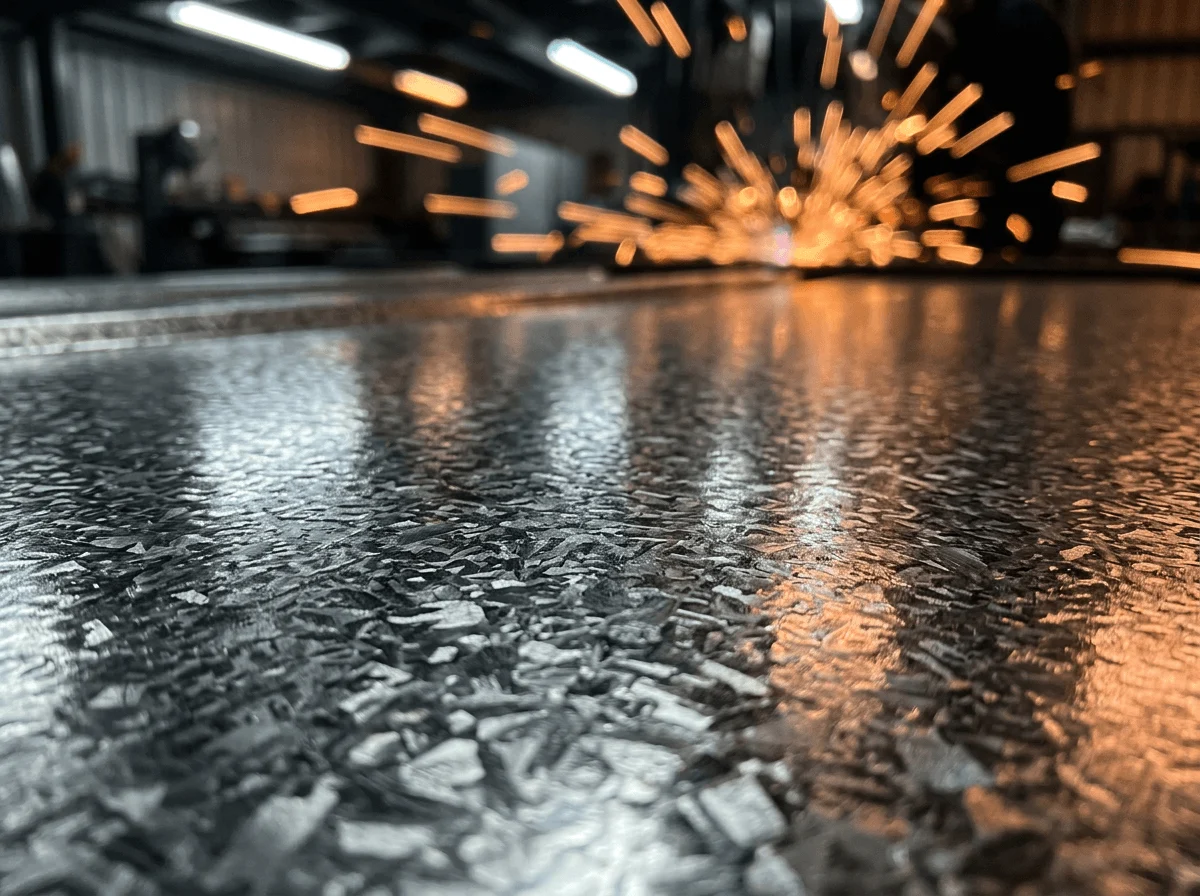
Sturdy external frames, constructed from heavy-gauge galvanized steel, act as the primary structural exoskeleton. They dictate the ultimate load-bearing capacity, preventing lateral expansion, securing the PVC liner seamlessly, and absorbing both static water weight and dynamic aquatic turbulence to entirely eliminate tank burst risks.
The Role of the Exoskeleton
A flexible PVC container is functionally useless for large-scale commercial aquaculture without an unyielding exoskeleton. The physics of water stored at depths exceeding 1.45 meters exert immense lateral pressure that requires rigid mechanical containment.
Galvanized Sheet Thickness and Yield Strength
We once saw a client’s project fail drastically because their previous supplier used inadequately gauged frames that bowed outward after just three months of commercial operation. At Bancy Solutions, we prioritize the precise thickness and corrugation depth of our galvanized sheets to maximize structural rigidity against lateral expansion.
| Structural Metric | Standard Market Frames | Bancy Engineering Standards |
|---|---|---|
| Material Profile | Thin, easily bent commercial alloys | Heavy-duty corrugated galvanized steel |
| Yield Strength | Fails and bows under lateral expansion | Maintains rigid geometry under peak load |
| Hardware Assembly | High-friction edges damaging liners | Smooth, precision-engineered locking joints |
Optimizing Cross-Border Shipping Volume
For overseas procurement managers, we optimize the logistics of these massive frames. By engineering large boards that nest perfectly into shipping containers, we drastically minimize cross-border shipping volume2 without compromising the heavy-duty structural specifications required for safe, industrial-scale deployment.
Balancing stocking density with tank structural limits?
Overcrowding fish accelerates biological waste and multiplies kinetic pressure. Miscalculating the ratio between biological ambition and physical container limits leads directly to both environmental crashes and hardware failure.
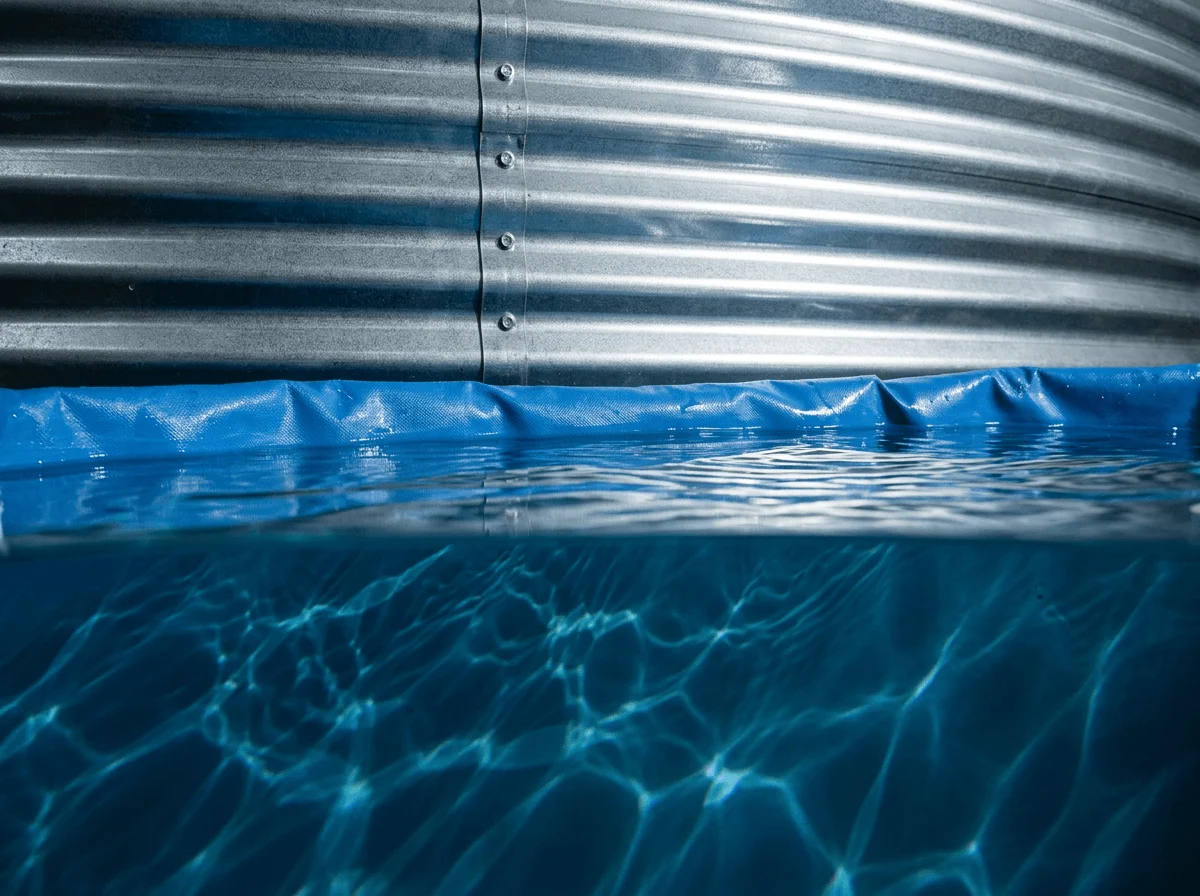
Balancing stocking density requires matching biological targets with the hydrostatic pressure limits of the specific tank infrastructure. While local aquaculture experts determine optimal fish counts, engineering dictates that the hardware must be precisely specified to withstand the maximum combined mass of water and biological volume.
Defining Biological vs. Physical Capacity
In commercial aquaculture, the relentless drive for higher yields pushes contractors to maximize their operational stocking density3. However, fish occupy physical volume. High densities displace water and exponentially increase the overall kinetic turbulence within the liquid medium.
The Dangers of Volumetric Displacement
Cheap market solutions often market "high capacity" without proportionally reinforcing the bottom seams or base frames. We constantly remind our B2B clients of the following engineering realities:
- Biological Consultation: Our density charts are baseline technical references. Actual capacity limits must be scientifically verified by local aquaculture experts based on aeration.
- Volumetric Displacement: Higher biomass requires deeper operational water levels, which exponentially increases base hydrostatic pressure.
- Hardware Foundation: Our strict responsibility as a manufacturer is to ensure the physical container remains indestructible.
Collaborative Supply Chain Transparency
By maintaining a highly transparent supply chain and providing rapid, precise Simple Drawings for technical specification confirmations, we collaborate with project contractors. This ensures the selected hardware provides a failsafe physical foundation for their most ambitious high-density operations.
Conclusion
Mastering fluid dynamics and material physics is essential for reliable high-volume aquaculture storage. By integrating heavy-duty galvanized frames and high-tensile liners, commercial facilities permanently secure their operations against catastrophic structural failures.