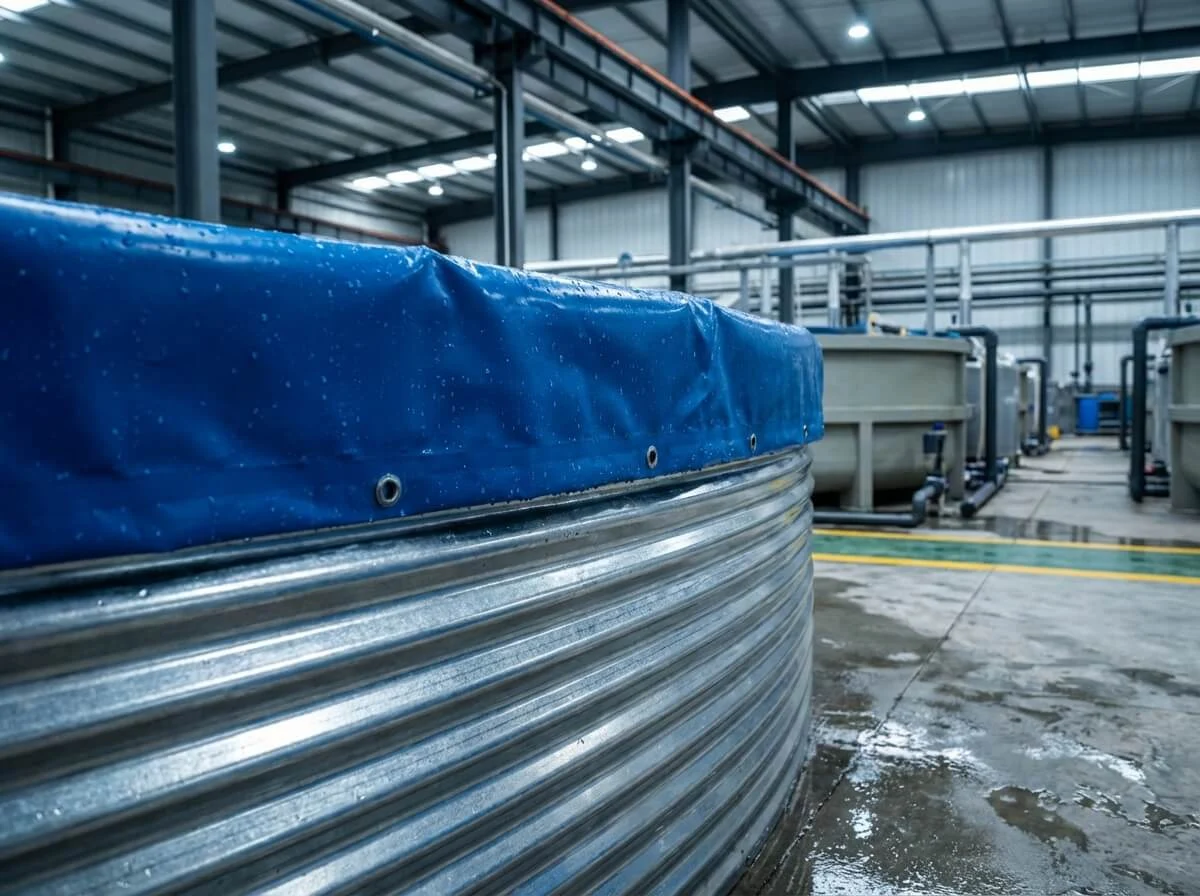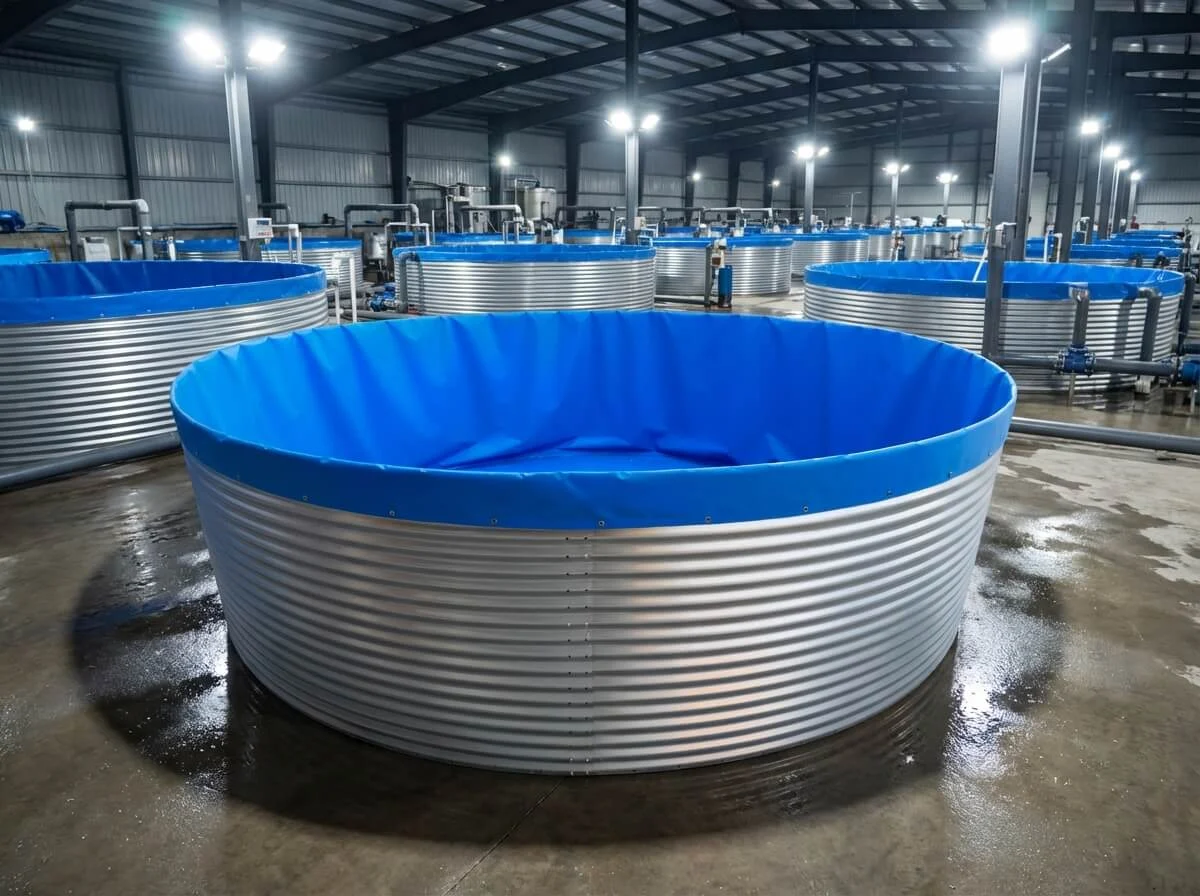
High-density RAS upgrades demand flawless structural integrity, yet failing to match the right tank frame to your environment leads to catastrophic liner blowouts and costly operational downtime.
In high-density RAS, galvanized pipe frames excel in indoor facilities requiring complex pipe integration and ventilation, whereas galvanized sheet tanks win in outdoor setups demanding extreme physical impact and wind resistance. Your choice depends entirely on environmental exposure and plumbing complexity.
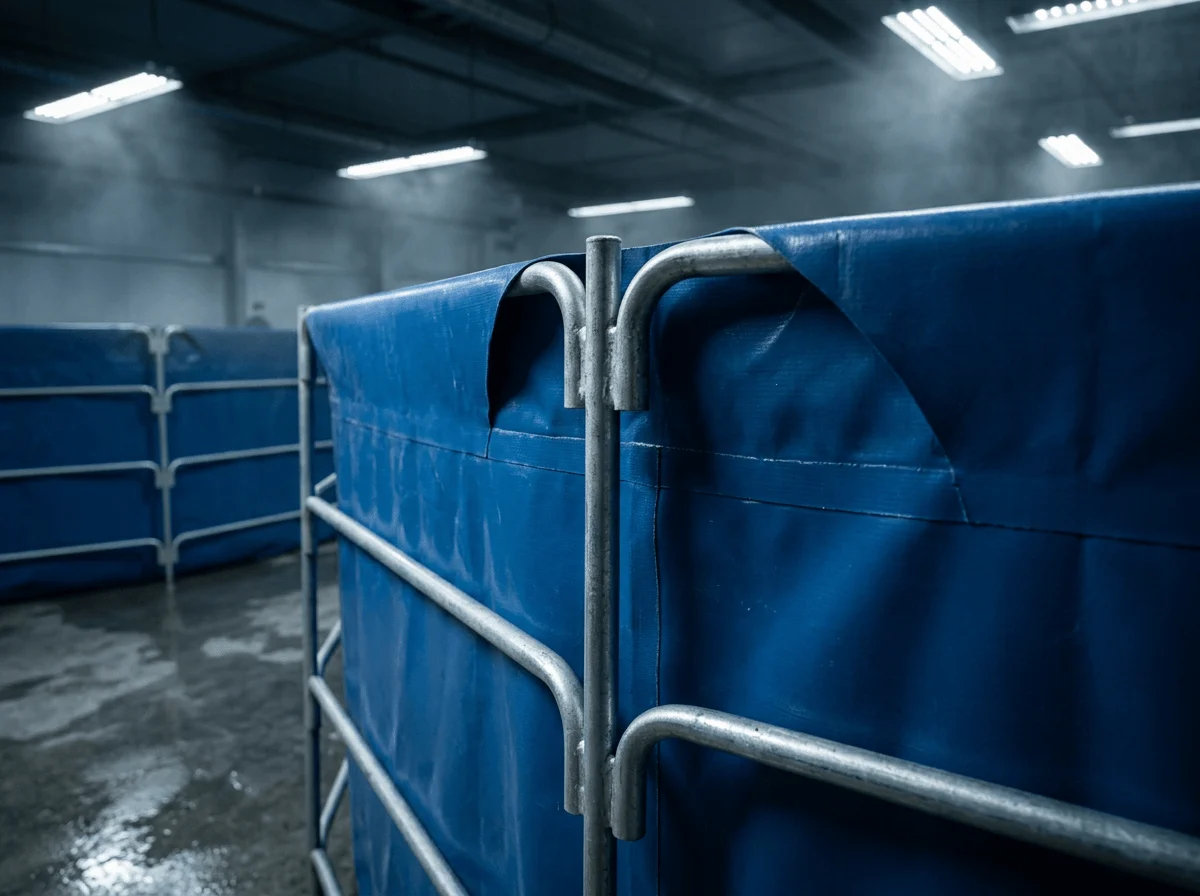
Understanding the specific load-bearing mechanics and environmental vulnerabilities of these frames is critical before finalizing your procurement list. Let us examine how engineering parameters separate the two systems so you can avoid costly infrastructure missteps.
How Recirculating Aquaculture Systems (RAS) dictate tank frame choices?
Integrating complex bio-filters and pump networks around bulky, incompatible frames causes massive deployment delays. Procurement managers must prioritize structural adaptability to avoid retrofitting nightmares.
RAS environments dictate tank frame selection through plumbing density1 and footprint constraints. Pipe frames allow unobstructed routing for inlet/outlet PVC networks, while sheet frames provide a uniform, rigid perimeter necessary for supporting heavy, automated feeder structures in large-scale operations.
Hydrostatic Load Distribution in RAS
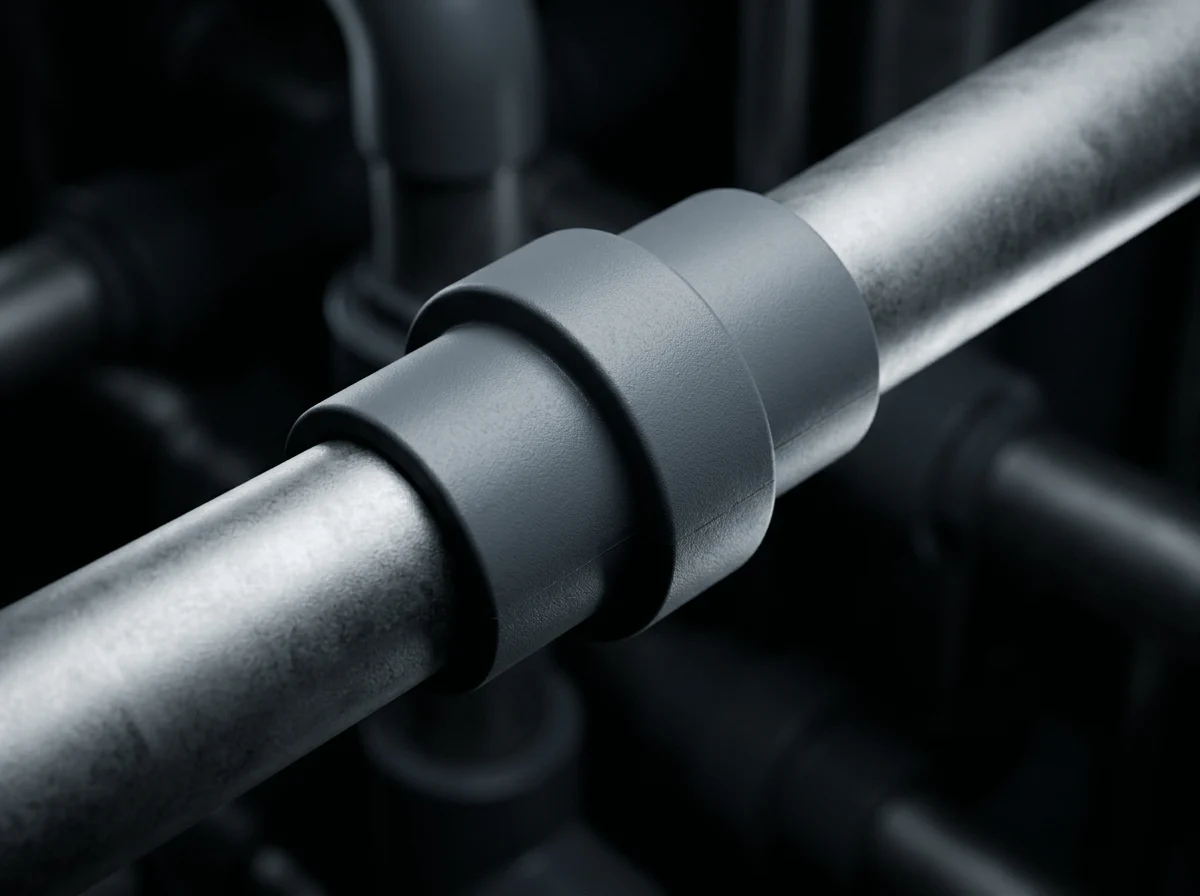
In commercial aquaculture operations, maintaining strict control over hydrostatic pressure2 is a non-negotiable engineering baseline. When designing a centralized Recirculating Aquaculture System (RAS), the flow dynamics and massive water volumes exert continuous outward stress. Galvanized pipe frames utilize a skeletal load-distribution model, transferring kinetic water energy directly into vertical support nodes. Conversely, corrugated sheet designs disperse this pressure evenly across a continuous horizontal plane. We consistently advise contractors to evaluate their concrete floor bearing capacity before selecting the frame topology, as point-loads differ significantly between the two.
Agile Pipeline Integration
A major challenge in high-density RAS3 is the sheer volume of plumbing required for oxygenation and particulate filtration. We frequently observe commercial project contractors facing severe installation bottlenecks when attempting to thread rigid 4-inch PVC return lines through inflexible structural panels. The open architecture of a pipe-based frame allows engineers to execute complex pipe runs with zero structural interference.
For large-scale indoor operations requiring intricate plumbing, ourGalvanized Steel Fish Tank (RAS) provides the exact structural tolerances required for rapid bio-filter and pump integration, directly accelerating your facility’s operational readiness.
Factory Manufacturing Standards vs. Cheap Alternatives
Market-standard products often utilize inferior welding that fails under continuous operational vibrations. At Bancy Solutions, our 5 automated production lines guarantee that every structural component is precision-engineered. Instead of relying on guesswork, our clients provide a Simple Drawing, and our engineering team instantly calibrates the structural load limits, bypassing lengthy CAD revisions and accelerating bulk order lead times.
| Engineering Metric | Galvanized Pipe Frame | Galvanized Sheet Frame |
|---|---|---|
| Plumbing Accessibility | Exceptional (Open architecture) | Restricted (Requires pre-cut bulkheads) |
| Ventilation (Indoor) | High | Moderate |
| Structural Modularity | Highly flexible for irregular floors | Best for standardized geometric grids |
The extreme corrosion resistance of high-quality galvanized tubes?
Saline environments and continuous moisture in aquaculture sheds rapidly degrade standard steel. Rusting structural points eventually collapse under hydrostatic pressure, destroying your investment.
High-quality galvanized steel tubes offer extreme corrosion resistance through hot-dip zinc coating processes that seal the metal core. This chemical barrier prevents oxidation even in high-humidity indoor RAS environments, ensuring the tank’s framework maintains its tensile strength over decades.

The Thermodynamics of Hot-Dip Galvanization
The high humidity and salinity intrinsic to commercial fish farming mercilessly attack inferior metals. Cheap market standard frames often utilize pre-galvanized coils with raw, exposed welded seams. When exposed to saltwater splash zones, these microscopic vulnerabilities rust within months. High-grade industrial tubes undergo a rigorous hot-dip galvanization4 process where the zinc forms a metallurgical bond with the steel, providing a self-healing cathodic protection layer that actively deflects corrosive agents in commercial agricultural zones.
Eliminating Joint Torsion and Micro-Fractures
Structural failure rarely begins with a massive impact; it starts with microscopic rust creeping into stressed joints. We once saw a client’s large-scale project fail disastrously because their budget-sourced frames corroded at the base joints. When the structural integrity5 was compromised, the resulting torsion caused a massive high-tensile PVC liner rupture. To prevent this, professional aquaculture setups mandate heavy-duty galvanized components where the wall thickness is precisely calculated to resist both moisture penetration and mechanical fatigue.
Procurement Metrics for Anti-Corrosion
To safeguard cross-border wholesale orders and long-term farm infrastructure, procurement directors should strictly verify the following specifications:
- Zinc Coating Thickness: Minimum requirements must be met to ensure longevity in high-salinity biofloc or RAS waters.
- Seamless Construction: Prioritizing joint mechanics6 that minimize raw metal exposure.
- High-Tensile Integrity: Ensuring the metal core retains full load-bearing capabilities even in 100% humidity environments.
By integrating solutions like a robust Galvanized Aquaculture Tank, contractors eliminate the hidden long-term costs of framework degradation.
Why sheet tanks offer better external impact protection?
Outdoor aquaculture facilities face unpredictable physical hazards, from heavy equipment collisions to severe wind sheer. Exposed liner systems risk fatal punctures without a rigid shield.
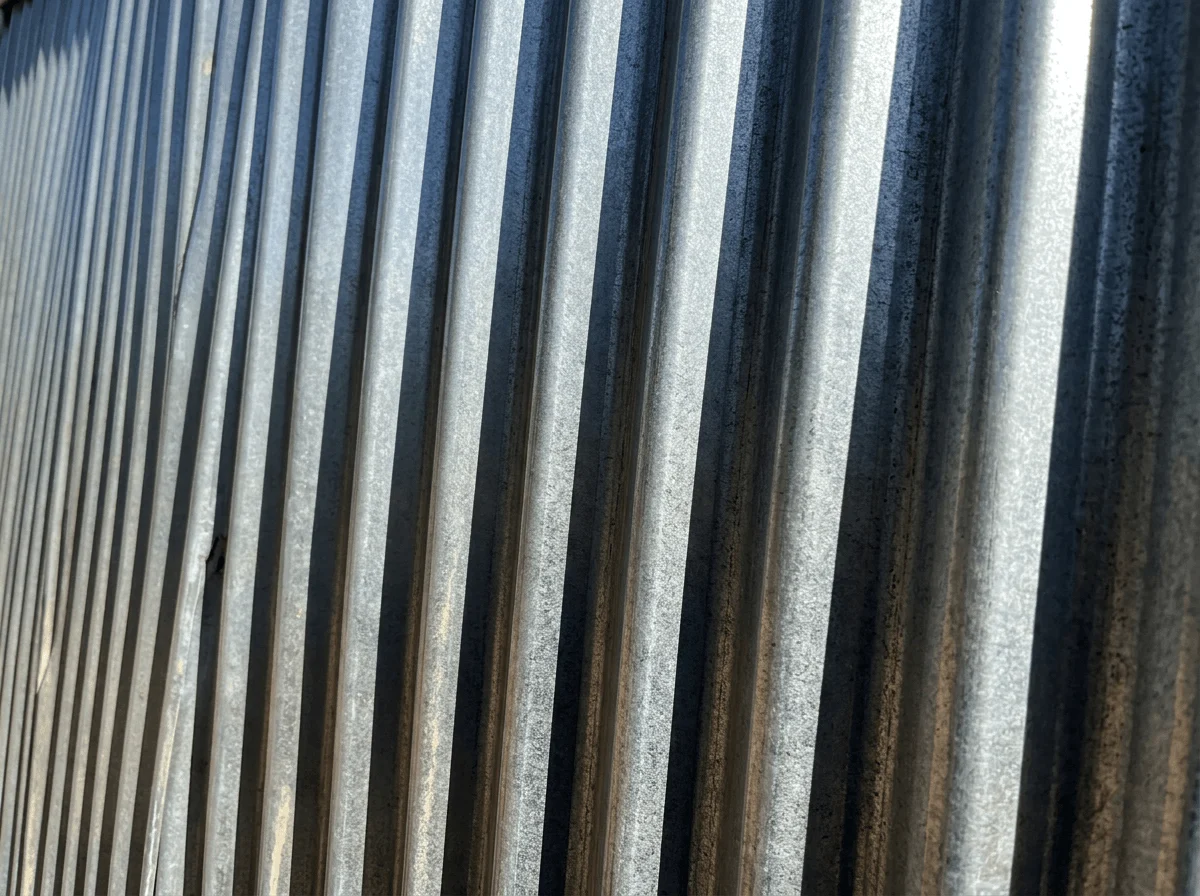
Galvanized sheet tanks provide a solid, impenetrable steel perimeter that shields the internal high-tensile PVC liner from heavy machinery impacts, debris, and extreme wind forces. This continuous physical barrier is essential for securing outdoor commercial farms against catastrophic breaches.
Kinetic Energy Dissipation
Outdoor agricultural environments are inherently aggressive. A stray forklift, shifting heavy machinery, or flying debris during a storm can instantly slice an unprotected commercial PVC bladder. The continuous barrier of a corrugated galvanized sheet acts as structural armor. The corrugation geometry specifically disperses external kinetic energy across the entire steel plate rather than localizing the impact at a single puncture point, dramatically lowering the risk of a catastrophic water loss event.
Managing High Hydrostatic Pressures (over 1.45m)
When scaling up commercial fish farms, maximizing water volume often requires tank depths exceeding 1.45 meters. At this depth, the internal hydrostatic pressure2 becomes immense. While pipe frames manage standard depths perfectly, corrugated sheet frames excel in containing massive volumetric expansion. Cheap market sheets that rely on 0.5mm thickness will buckle under these combined hydrostatic and external loads. Bancy Solutions strictly utilizes heavy-duty sheet thickness standards to guarantee zero deformation under maximum capacity.
Preventing Equipment Collision Failures
Industrial Case Scenario: A major agri-project contractor in a high-wind coastal zone suffered repeated liner tears from airborne debris until they upgraded to corrugated sheet boundaries. The upgrade stabilized their operational yield instantly.
| Hazard Profile | Pipe Frame Vulnerability | Sheet Frame Defense |
|---|---|---|
| Heavy Machinery Impact | Liner exposed to direct puncture | High impact absorption |
| High Wind Shear | Potential liner flapping/stress | Complete structural rigidity |
| High-Depth Pressure (>1.45m) | Requires reinforced bracing | Inherent structural containment |
Customizing your footprint: Pipe tanks for irregular greenhouse spaces?
Maximizing volumetric yield in irregularly shaped agricultural greenhouses is notoriously difficult. Forcing standardized, rigid dimensions into restricted layouts wastes highly profitable square footage.
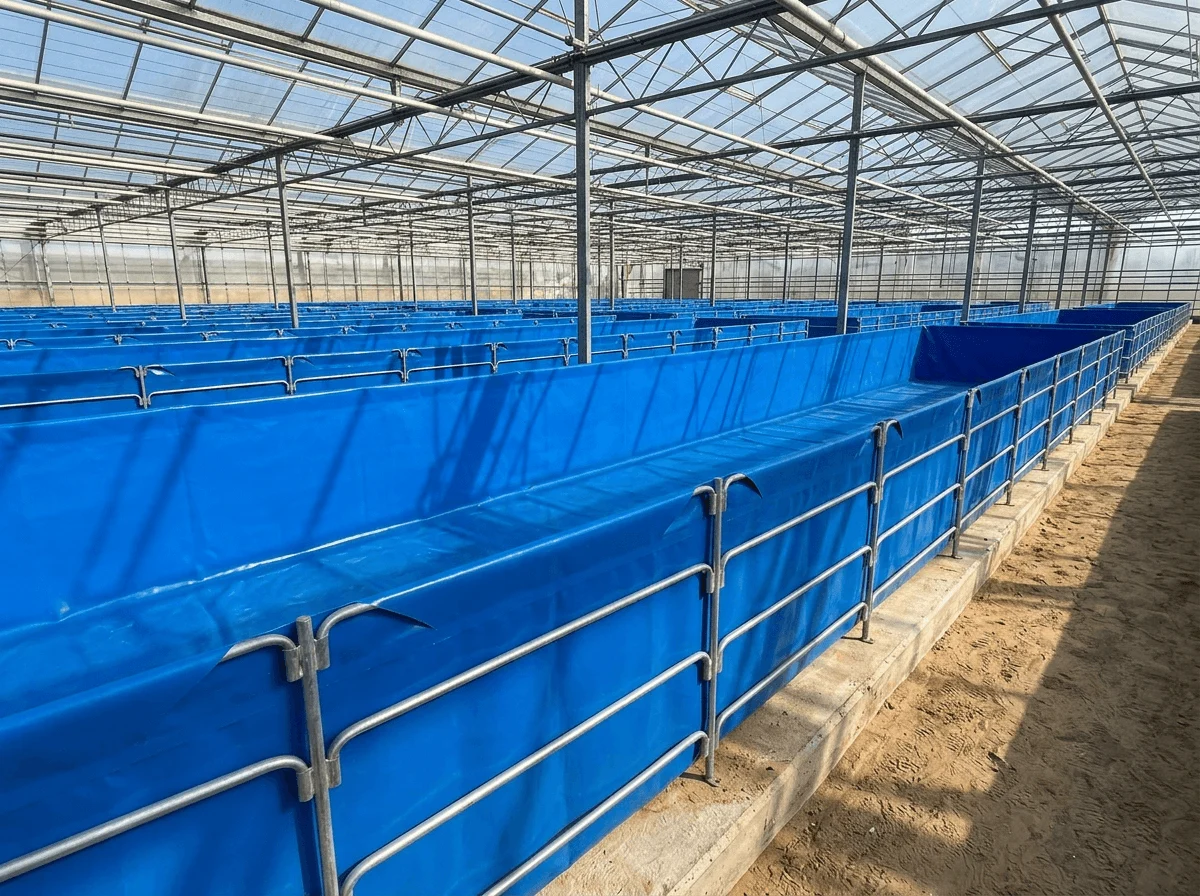
Galvanized pipe tanks offer unparalleled modularity, allowing project contractors to customize structural dimensions to fit irregular greenhouse footprints perfectly. This adaptability maximizes water volume and stocking density without requiring expensive facility modifications or heavy lifting equipment.
Overcoming Irregular Spatial Constraints
Commercial fish farms rarely operate in perfect geometric grids, especially when contractors are tasked with repurposing existing agricultural infrastructure7. Large-scale greenhouses often contain load-bearing pillars, uneven base slopes, and low-clearance ventilation8 zones. Rigid, oversized commercial tanks simply cannot maximize these restrictive footprints. Pipe frames offer the agility to deploy customized layouts9, wrapping seamlessly around structural obstacles and maximizing every square meter of usable farming space.
The "Simple Drawing" Rapid Prototype Protocol
Through Bancy Solutions’ agile manufacturing10 capabilities, we bridge the gap between complex spatial demands and rapid factory production. Procurement managers handling vast agricultural portfolios do not have the time to draft extensive CAD blueprints for every facility iteration. By supplying us with a "Simple Drawing" detailing width, length, and height constraints, our engineers calculate the optimal pipe diameter and base preparation requirements (evaluating concrete vs. compact sand base costs) to fast-track bulk manufacturing.
Cross-Border Volume Optimization
Beyond the physical installation, logistics optimization plays a massive role in international procurement ROI.
- Shipping Density: Pipe systems bundle exceptionally well, drastically reducing the cubic meter footprint inside shipping containers.
- Landed Costs: Lower transit volume translates to significantly lower freight costs compared to shipping bulky, pre-formed sheet panels.
- Agile Assembly: Deploying modular frames requires minimal heavy lifting equipment on-site, accelerating project timelines and reducing manual labor overhead.
Conclusion
Selecting between pipe and sheet frames hinges on indoor plumbing density versus outdoor impact risks. Partnering with a direct manufacturer guarantees structural reliability and rapid, customized deployment for bulk procurement.
-
Explore the concept of plumbing density and its significance in RAS design. ↩
-
Gain insights into how hydrostatic pressure impacts tank design and safety. ↩ ↩
-
Explore the advantages of high-density RAS systems for efficient aquaculture management. ↩
-
Discover the advantages of hot-dip galvanization for enhancing metal durability. ↩
-
Understand the importance of structural integrity in ensuring the longevity of aquaculture setups. ↩
-
Understand how joint mechanics contribute to the overall strength of aquaculture structures. ↩
-
Learn about innovative ways to adapt existing agricultural infrastructure for aquaculture use. ↩
-
Learn about the role of ventilation in maintaining optimal conditions for fish farming. ↩
-
Find out how tailored layouts can maximize space and productivity in aquaculture. ↩
-
Learn how agile manufacturing can streamline production processes in aquaculture. ↩